
 Articles
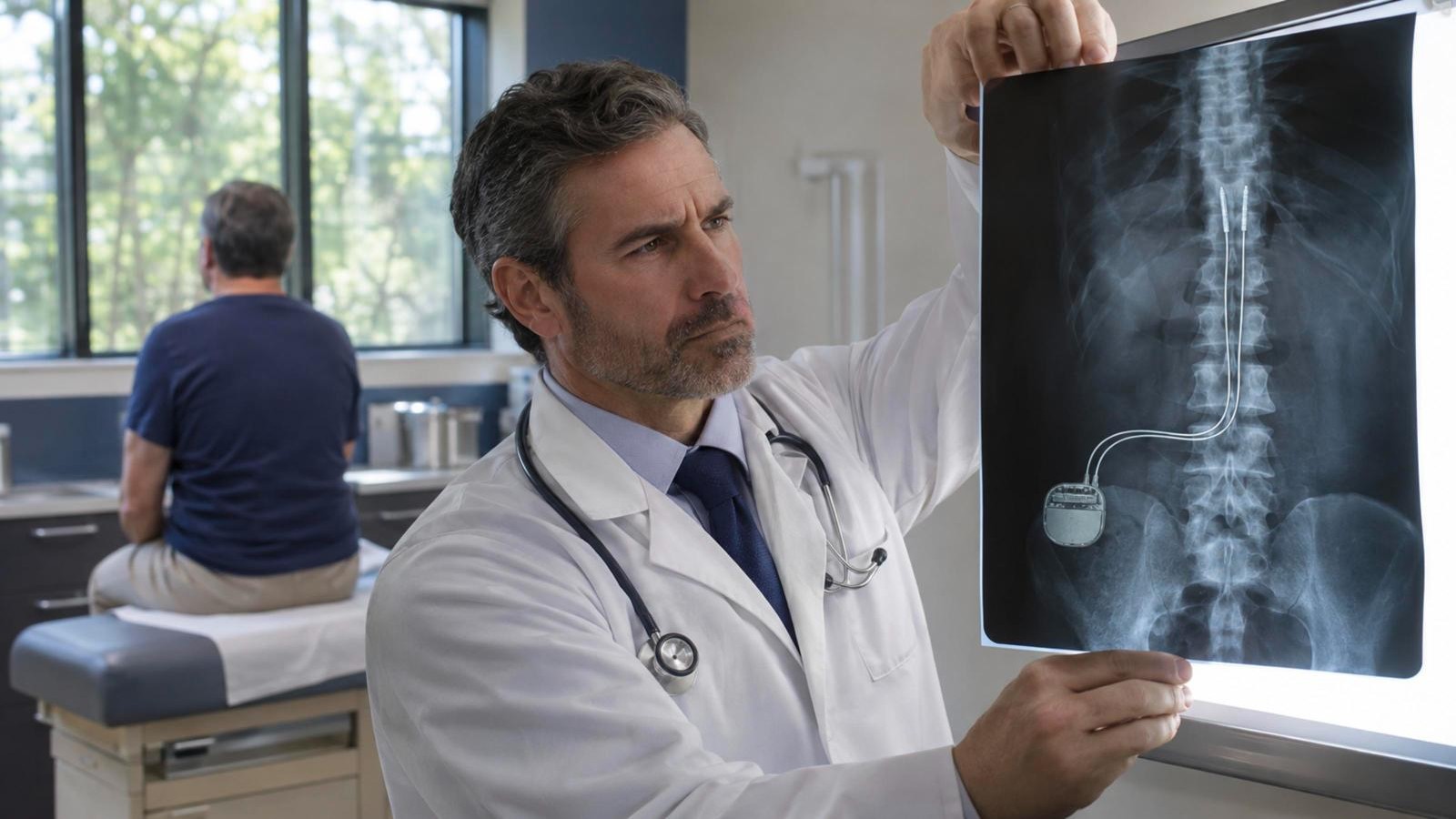
Sometimes, yes. A spinal cord stimulator that shocked or burned you, moved out of place, caused new nerve problems or never relieved your pain can be the basis of a product liability claim against the company that made it. Whether you have a claim depends on which device you had, what went wrong, what your records show and how much time has passed. These are the questions we hear most from patients, with the answers we give on the phone.
Your Health Comes First: Do not turn off, stop charging or seek removal of your stimulator because of a lawsuit or a recall notice. Those are medical decisions to make with your doctor. If you have sudden weakness or numbness, loss of bowel or bladder control, fever, or signs of infection at the implant site, get medical care right away.
Has Your Spinal Cord Stimulator Caused Problems?
You may have a claim if all three are true:
- You have, or had, a permanent stimulator made by Boston Scientific, Abbott (or St. Jude Medical), Nevro or Medtronic, implanted within the last 10 years.
- After the implant you had shocks, burns, a lead that moved, nerve pain, numbness or paralysis; little or no relief, or worse pain; or new bladder, bowel, swallowing or digestive problems, or you can no longer have an MRI.
- The device was removed or turned off for good, you asked to have it removed, or your doctor said it can’t be.
Did a company representative talk with you about how well it would work or about side effects? Tell us when you call 866-837-1010 or send us a message. The review is free. Do not have a device removed for the sake of a claim.
My spinal cord stimulator stopped working. Can I sue?
Possibly. A stimulator that gave no real relief after the first few months, or that left you in more pain than before, can support a claim, but only if the lack of relief is written down in your medical records.
Poor pain relief is the most common complaint in the FDA’s reports on these devices, so you are far from the only one. The hard part is proof. If your chart shows visit after visit of reprogramming, your complaints that it isn’t helping, and finally a decision to turn it off or take it out, that is documentation. If the only record is your memory, it is not a claim we take.
We also look at what happened to the device afterward. A claim generally needs a stimulator that was removed, one that was turned off for the long term, one you asked to have removed, or one your doctor says can’t come out.
My stimulator had to be surgically removed. Can I sue the manufacturer?
Often that is where a claim starts. Removal surgery shows the problem was serious enough to operate on, and the claim is against the company that made the device, not the doctor who implanted it.
What matters next is why it came out. We look for a reason tied to the device: unexpected shocks, burns, a lead that moved, new nerve pain or burning, numbness or paralysis, or a stimulator that did not work.
If yours is still in and removal is being discussed, that decision belongs to you and your doctor. Do not have it removed for the sake of a claim. If it does come out, ask the surgeon and the hospital in writing, before the operation, to keep the generator and the leads. Our post on spinal cord stimulator removal explains what to save.
Can I sue if my leads moved and made my pain worse?
Lead migration is one of the device problems these lawsuits are about, and pain that got worse after the implant is another. Together they can make a claim, especially if the leads had to be repositioned or the system was turned off or removed.
Timing matters. We generally look for at least two weeks between the implant and the first symptoms. Weakness, numbness or paralysis that showed up during or right after the operation is usually a question about the surgery, not the device, and surgical injury cases are not the ones we are reviewing.
Do I have a case if my spinal cord stimulator was recalled?
Not from the recall alone. A recall notice does not give you a claim, and the lack of a recall does not take one away. What counts is what the device did to you.
The best-known recent recall shows why. In September 2026 the FDA announced a Class I recall of Boston Scientific’s Infinion CX leads, but it covered leads that had not been implanted yet. It did not call for removing leads already in patients. If your stimulation has changed, a recall is a good reason to ask your doctor to check the device. It is not a reason to turn it off or have it taken out. We cover it in our Infinion CX recall post.
Are shocks or burns enough for a claim?
Burns can be. Shocks by themselves usually are not if the stimulator otherwise did its job. Shocks together with little or no pain relief can be, and we want to hear about those.
Either way, the next question is the same one we ask everyone: was the device removed or turned off for good because of it?
What other problems can support a spinal cord stimulator claim?
Beyond shocks, burns and lead problems, we review claims involving new nerve pain or a burning sensation, numbness or paralysis, and certain side effects that started after the implant: loss of bladder or bowel control, trouble urinating, gastroparesis, trouble swallowing, uncontrollable diarrhea, or no longer being able to have an MRI.
One caution on bladder symptoms. These claims involve spinal cord stimulators implanted for pain. A bladder stimulator is a different device, and we do not take those cases. Our post on side effects and complications goes through what patients report.
What does not qualify?
We do not take claims based on a trial stimulator that was never made permanent, a surgical-site infection alone, shocks alone when the device otherwise worked, or a device that never helped when the records do not say so. We also do not take cases involving other kinds of implanted stimulators, injuries from the implant surgery itself, or devices implanted more than 10 years ago.
Other firms draw these lines in different places. If you are not sure which side of a line you are on, call and we will tell you.
Does it matter what the company representative told me?
Yes. Most patients met a manufacturer’s representative at the trial, in the operating room or at programming visits, and what that person said about how well the device would work and about side effects matters to a claim.
So we ask. Did a representative talk with you about how much relief to expect, or about risks? Do you remember what was said, and roughly when? If you still have texts, emails or voicemails from the representative, keep them.
Who would I be suing?
The manufacturer. These are product liability lawsuits against Boston Scientific, Abbott (or St. Jude Medical), Nevro and Medtronic, and each patient files an individual case. It is not a class action.
The federal courts have grouped the cases by company: Boston Scientific cases in MDL 3181 in the Central District of California, Abbott cases in MDL 3194 in the Northern District of Illinois, and Nevro cases in MDL 3195 in the Northern District of California. Medtronic cases are not centralized. Our spinal cord stimulator lawsuit page explains the litigation as a whole, and the Boston Scientific, Abbott, Nevro and Medtronic pages cover each company’s devices.
How long do I have to sue?
It depends on your state, and it can be short: generally one year in Tennessee, two years in Alabama and Georgia, and three years in North Carolina.
The clock can start at the first sign the device is causing harm, such as being told to turn it off, and not at the removal surgery. Missed deadlines end more of these claims than anything else. Do not wait for a recall or a settlement to have your dates checked.
What should I do if I think I have a claim?
Keep seeing your doctor, and do not turn off, stop charging or remove the stimulator because of a lawsuit. Then gather what you have: your implant card, the remote and charger, the records from your implant and any later surgery, and any messages from the company representative.
Write down a timeline while you still remember it: the implant date, when each problem started, who you told and what they said. Then call us and we will go through it with you.
Talk With a Spinal Cord Stimulator Lawyer
Fob & Foster Personal Injury Lawyers review spinal cord stimulator claims for patients in Alabama, Georgia, Tennessee and North Carolina. The review is free, and there is no fee unless we recover for you. Call 866-837-1010 or send us a message. For where the cases stand, see our lawsuit update and our post on verdicts and settlements.
Frequently Asked Questions
Can I sue my doctor over a spinal cord stimulator that failed?
The lawsuits described here are against the device manufacturers, not the doctors who implanted the stimulators. A problem caused by the surgery itself is a separate question and not one of the claims we are reviewing.
Is there a class action for spinal cord stimulators?
No. Each patient files an individual lawsuit. The federal cases against Boston Scientific, Abbott and Nevro are coordinated in three multidistrict litigations, so one judge handles the shared questions for each company.
Do I need to have my stimulator removed to have a claim?
No, and you should never have a device removed for the sake of a claim. We look at what has already happened: a device that was removed or turned off for the long term, a request to have it removed, or a doctor’s word that it can’t come out.
How much does it cost to hire a spinal cord stimulator attorney?
Nothing up front. We review the claim at no charge, and there is no fee unless we recover for you.

Fob James, IV
Fob James obtained a B.S., in software engineering from Auburn University and then continued his education by getting his J.D. from Vanderbilt University School of Law. After working for a large national firm for several years, Fob found that his passion was fighting for individuals who have been seriously injured or wronged by others. Fob believes that the jury is the great equalizer to the power and influence that large corporations have in society. Many of Fob’s cases are high profile and have been featured in, among others: Bloomberg News, PlanAdvisor, AL.com, PlanSponsor, National Law Review, and BusinessInsider. For his work in obtaining numerous multi-million dollar outcomes for his clients, Fob has been recognized by: National Trial Lawyers Top 100, SuperLawyers Rising Star (2020-2026), Birmingham Business Journal Who’s Who in Law (2023-2025), and TrustAnalytica – Top Personal Injury Lawyers in Alabama.