
When a Workplace Injury Is More Than a Workers’ Comp Claim in Birmingham
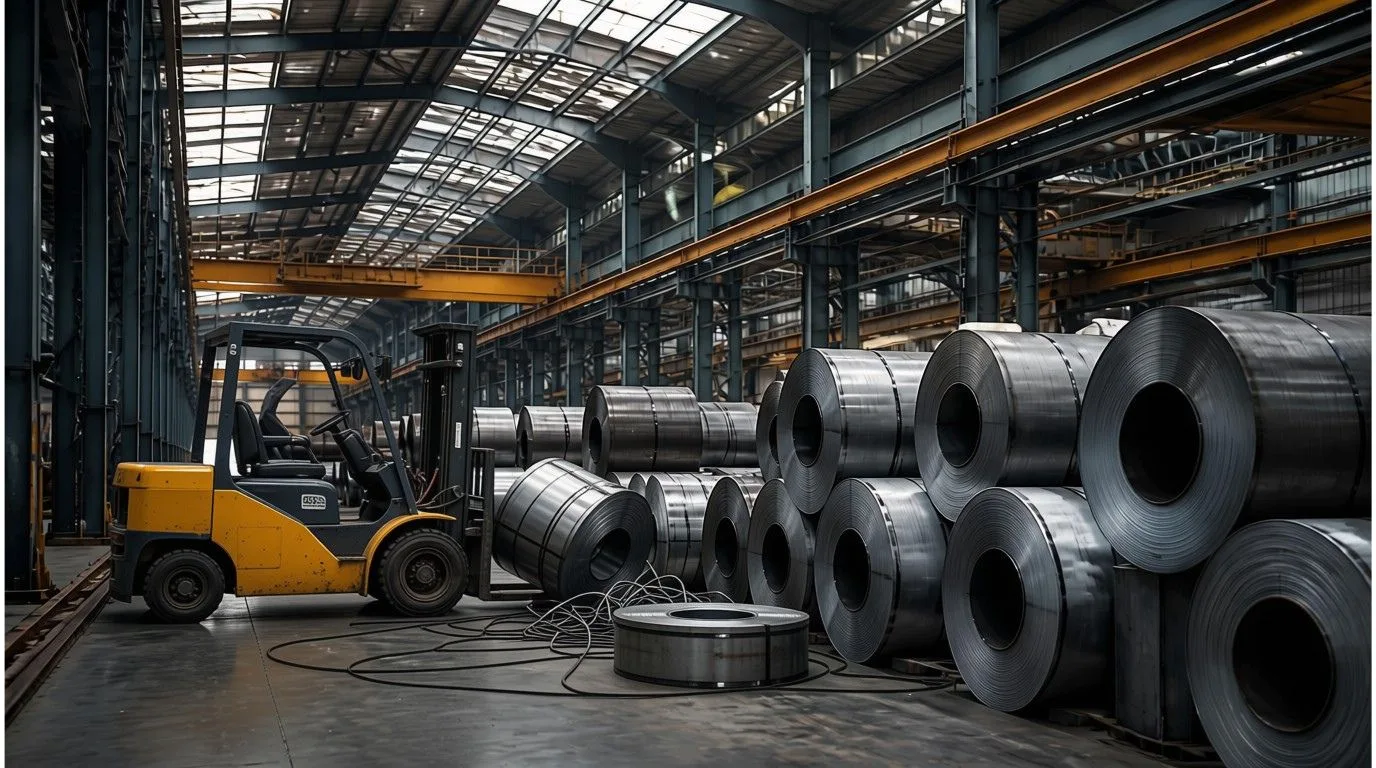
Birmingham was built on heavy industry, and heavy industry still defines much of the region’s economy. Steel and metal fabrication, pipe foundries, plants and refineries, warehouses and distribution centers, rail yards, chemical processing, mining, and power generation employ thousands of people across Jefferson County.
When something goes wrong in these environments, it rarely goes wrong in a small way. Machine entanglements, crush injuries, falls from height, electrocutions, burns, and explosions produce some of the most catastrophic injuries our firm sees in industrial and manufacturing accidents.
Most injured industrial workers are told the same thing in the days after an accident: file your workers’ compensation claim, and that is your remedy. That advice is incomplete. Workers’ compensation pays limited, formula-based benefits, and it is the exclusive remedy only against your employer.
If anyone other than your employer caused or contributed to your injury, Alabama law allows you to bring a full civil lawsuit against that third party, in addition to the comp claim, and that lawsuit is where meaningful accountability and recovery are usually found.
Fob James Personal Injury Lawyers concentrates on the third-party liability side of industrial accident cases.
We do not handle the workers’ compensation component itself; as Birmingham industrial accident lawyers, we pursue the civil case against the manufacturers, contractors, and other companies whose negligence caused the harm, and we regularly work alongside dedicated workers’ compensation counsel so that both cases move in coordination.
Trial-tested lawyers serving Birmingham. $100M+ recovered for injured Alabamians.

J.D., Vanderbilt Law School

40+ years personal injury trial experience
At a Glance: Industrial Accident Claims in Alabama
- Workers’ compensation is the exclusive remedy against your employer, but it is often not the whole story
- Equipment manufacturers, contractors, property owners, and maintenance companies can be held fully liable in a separate third-party lawsuit
- Our firm recently secured a $6 million settlement in a confidential industrial accident case
- We focus on the third-party liability case and work alongside your workers’ compensation counsel
- Free consultation, no fees unless we recover: (205) 407-6009
Past results do not guarantee or predict a similar outcome in any future case. Every case must be evaluated on its own facts.
Why Birmingham Workers’ Compensation Alone Is Rarely Enough
Under Alabama’s exclusive remedy doctrine, codified at Ala. Code § 25-5-52 and § 25-5-53, an employee covered by workers’ compensation generally cannot sue their employer in tort for a workplace injury or death.
In exchange, the employee receives comp benefits without having to prove fault. Those benefits include medical treatment and wage-replacement payments calculated as a percentage of the worker’s average weekly wage, subject to statutory caps. In a fatal accident, dependents receive formula-based death benefits and a capped burial allowance.
For a worker facing permanent disability, or a family that has lost its primary earner, those formula benefits do not come close to covering the true loss. Workers’ compensation pays nothing for pain and suffering. It does not account for a lifetime of diminished capacity. And in a death case, it does not deliver the accountability that Alabama’s wrongful death law is designed to impose on wrongdoers.
A narrow group of workers falls outside the comp system entirely. Alabama’s Employers’ Liability Act, Ala. Code § 25-6-1, can permit a direct action against an employer when the employment relationship is not subject to the Workers’ Compensation Act at all, such as very small employers who have not opted in.
The Alabama Supreme Court has held the two statutes are mutually exclusive: if comp applies, the Employers’ Liability Act does not. Which framework governs your case is one of the first questions an experienced industrial accident attorney will answer.
That is why the third-party investigation matters so much. The comp system’s limits apply to the claim against your employer. They do not protect anyone else.
Who Can Be Held Liable in a Third-Party Industrial Accident Case in Birmingham
Ala. Code § 25-5-11 expressly preserves an injured worker’s right to sue parties other than the employer whose negligence or wrongful conduct caused the injury. In Birmingham-area industrial cases, the responsible third parties frequently include:
- Equipment and machine manufacturers. Defectively designed machines, inadequate guarding, missing interlocks, and insufficient warnings are pursued under Alabama’s product liability framework, the Alabama Extended Manufacturer’s Liability Doctrine (AEMLD). Our firm’s defective products practice handles these claims regularly.
- General contractors and subcontractors on multi-employer job sites, where one company’s crew creates the hazard that injures another company’s employee.
- Property and facility owners who allow dangerous conditions to persist on premises where outside workers are present.
- Maintenance and service contractors whose negligent repair, inspection, or servicing of equipment leaves it in a dangerous condition.
- Trucking, delivery, and logistics companies operating on industrial sites.
- Component suppliers and installers whose parts or installation work fail.
Identifying every potentially responsible party is one of the most consequential steps in an industrial accident case, and it must happen early, before machines are repaired, records are purged, and the scene is changed.
The Safety-Guard Exception: When a Co-Employee Can Be Sued in Birmingham
Alabama law contains one narrow but important exception to co-worker immunity. Under Ala. Code § 25-5-11, a co-employee is ordinarily immune from suit for mere negligence, but liability exists for willful conduct, which the statute defines to include the willful and intentional removal of a safety guard or safety device provided by the manufacturer of a machine.
In real industrial workplaces, this exception matters. Guards get removed to speed up production. Interlocks get bypassed. Light curtains get disabled.
When a worker is maimed by a machine whose safety device was deliberately removed, Alabama law provides a path to accountability that most injured workers have never been told exists. These cases are fact-intensive and evidence-sensitive, and the machine itself is the single most important piece of evidence. Preserving it before it is altered is urgent.
Fatal Industrial Accidents and Alabama Wrongful Death Law
When an industrial accident kills a worker, the family’s claims divide along the same line. Against the employer, dependents receive workers’ compensation death benefits. Against any responsible third party, the personal representative of the estate may bring a wrongful death claim under Ala. Code § 6-5-410.
Alabama’s wrongful death statute is unlike nearly every other state’s: damages are exclusively punitive, measured by the wrongfulness of the defendant’s conduct rather than the victim’s earnings.
A manufacturer that shipped an unguarded machine, or a contractor that ignored basic safety protocols, faces a jury empowered to punish that conduct. The wrongful death claim must be brought within two years of the date of death.
How Defendants Fight These Cases in Birmingham
Third-party defendants and their insurers defend industrial cases aggressively, and Alabama’s common-law contributory negligence doctrine, reaffirmed by the Alabama Supreme Court in Golden v. McCurry, 392 So. 2d 815 (Ala. 1980), is their favorite weapon.
If the defense can pin even a sliver of fault on the injured worker, the entire third-party claim can be barred. Expect arguments that the worker was trained on the hazard, ignored a warning, or used the machine improperly.
Beating a contributory negligence defense requires building an overwhelming liability case: securing the machine, obtaining OSHA’s investigation file, retaining engineering and human-factors experts, and documenting how the defendant’s own conduct made the accident inevitable.
OSHA citations do not decide a civil case, and OSHA provides no compensation to the worker, but the investigation frequently surfaces evidence that becomes central to the third-party claim.
Families should also understand one honest structural point: the workers’ compensation carrier holds a subrogation right under § 25-5-11 to be reimbursed from a third-party recovery for benefits it has paid. Managing that lien is part of maximizing what the injured worker and family actually keep, and it is a negotiation we handle as part of every third-party case.
What to Do After an Industrial Accident in Birmingham
The first days after a serious industrial or plant accident decide much of what follows. Machines get repaired or scrapped. Incident reports get written by people protecting the company. Surveillance footage gets overwritten. Witnesses get coached or scattered.
If you or a family member has been seriously injured, get medical care and report the injury, then speak with an attorney before giving any recorded statement to anyone’s insurance carrier.
Our firm moves immediately to send spoliation and preservation letters covering the machine, maintenance logs, training records, incident reports, and video, and to get our own experts in front of the evidence before it changes.
Talk to a Birmingham Industrial Accident Attorney
Fob James Personal Injury Lawyers has recovered more than $100 million for injured people, including a recent $6 million settlement in a confidential industrial accident case. Catastrophic injury cases, including traumatic brain injuries, are a core part of our practice.
Every case is handled on a contingency-fee basis. You pay nothing unless we recover for you. Call (205) 407-6009 for a free, no-obligation consultation with a Birmingham industrial accident lawyer.
Serving Injured Industrial Workers Across Alabama
Our industrial accident attorneys represent workers and families throughout Birmingham, Bessemer, Hoover, Trussville, and all of Jefferson County, as well as statewide, including Montgomery, Huntsville, Tuscaloosa, and the Mobile area. Wherever the plant, mill, warehouse, or job site is located in Alabama, the evidence disappears on the same fast clock, and we travel to the case.
From heavy steel manufacturing along the railroad corridors to vast warehousing facilities on the city’s outskirts, our legal team understands Birmingham’s industrial landscape, workplace hazards, and third-party liability rules inside and out.
Birmingham was built on industry, and our firm routinely represents workers, contractors, and tradespeople injured across the city’s primary industrial zones:
- Ensley & Pratt City: Historic hubs for heavy metal fabrication, steel manufacturing, and industrial recycling operations.
- North Birmingham & Acipco Finery Area: Home to major pipe foundries, chemical processors, and heavy industrial facilities with complex machinery risks.
- West End & Powderly: Characterized by heavy commercial transport, scrap yards, and industrial distribution centers.
- East Lake & Roebuck Industrial Zones: Features extensive warehousing, logistics operations, and light manufacturing plants.
- Titusville & Thomas: Urban industrial zones surrounding major rail yards and intermodal freight transfer terminals.
- Oxmoor Valley: A rapidly growing industrial corridor housing regional distribution networks, commercial printers, and manufacturing plants.
If you or a loved one has been injured in an industrial accident anywhere in Birmingham, do not face the insurance companies alone. The legal team at Fob James Personal Injury Lawyers is ready to review your case, answer your questions, and fight for the compensation you deserve.
Visit our Birmingham office at 2226 1st Ave S, Suite 105, Birmingham, AL 35233, or call us today to schedule your free, no-obligation consultation.
Birmingham Industrial Accident FAQ
Can I sue my employer for an industrial accident in Alabama?
Generally no. Workers’ compensation is the exclusive remedy against your employer under Ala. Code § 25-5-52 and § 25-5-53. But third parties, such as equipment manufacturers, contractors, and property owners, can be sued in a separate civil case. A narrow exception under the Employers’ Liability Act, § 25-6-1, applies only when the employment is not covered by the Workers’ Compensation Act.
What is a third-party industrial accident claim?
A civil lawsuit against someone other than your employer whose negligence caused your injury, brought under Ala. Code § 25-5-11 alongside your workers’ compensation claim. It allows full tort damages that workers’ comp does not provide.
What if a safety guard was removed from the machine that injured me?
Alabama law allows a claim against a co-employee for the willful and intentional removal of a manufacturer-provided safety guard or device. These cases require fast evidence preservation before the machine is altered.
How long do I have to file?
Third-party injury claims are generally subject to Alabama’s two-year statute of limitations, and wrongful death claims must be brought within two years of the date of death. Workers’ compensation deadlines differ. Act quickly regardless, because the critical evidence disappears far sooner than any deadline.
Past results do not guarantee or predict a similar outcome in any future case. Every case must be evaluated on its own facts.