
 Articles
A spinal cord stimulator is supposed to quiet chronic pain. For some patients it does the opposite. This article lists the complications patients describe in the lawsuits, what the FDA’s own reports show, and when a complication may be a legal claim.
Your Health Comes First: Do not turn off, stop charging or seek removal of your stimulator because of a lawsuit or a recall notice. Those are medical decisions to make with your doctor. If you have sudden weakness or numbness, loss of bowel or bladder control, fever, or signs of infection at the implant site, get medical care right away.
Has Your Spinal Cord Stimulator Caused Problems?
You may have a claim if all three are true:
- You received a permanent stimulator made by Boston Scientific, Abbott (or St. Jude Medical), Nevro or Medtronic.
- After the implant you had a serious complication: shocks or burns, a lead that moved or broke, loss of therapy, an infection, or new nerve, bowel or bladder problems.
- You needed medical treatment because of it, such as revision, replacement or removal surgery.
Call 866-837-1010 or send us a message. The review is free. Do not have a device removed for the sake of a claim.
Complications Patients Report
- Shocks and jolts: sudden, painful surges of stimulation, sometimes set off by movement or charging.
- Burning or overheating at the generator site, especially during charging.
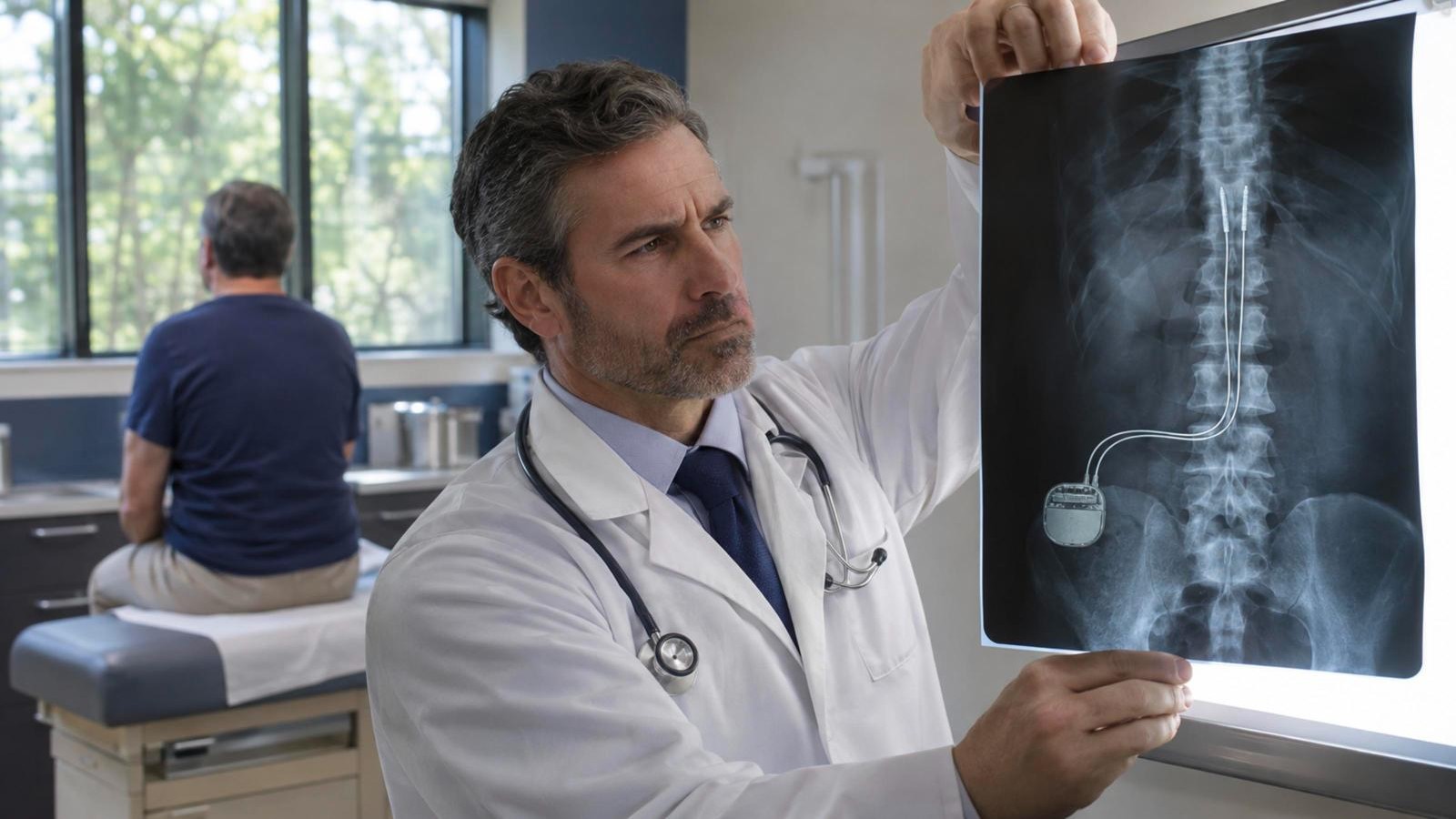
- Lead migration or fracture: the wires move away from the target or break, so stimulation is lost or lands in the wrong place.
- Loss of therapy: the device stops relieving pain, shuts off, or cannot be recharged or reprogrammed.
- Worse pain than before the implant, or new pain at the battery pocket.
- Nerve injury: new numbness, weakness, foot drop, trouble walking, and in the most serious cases paralysis.
- Bowel, bladder or other autonomic problems that began after the implant.
- Infection, spinal fluid leaks and skin erosion over the hardware.
- More surgery: revision, replacement or removal, often more than once.
What the FDA Has Counted
On September 3, 2020 the FDA sent a letter to health care providers about spinal cord stimulators. The agency said it had received 107,728 medical device reports in the four years after July 27, 2016, including 30,321 reports of unsatisfactory pain relief, and reports of 428 deaths of patients with the implants between 2005 and 2020.
A medical device report says something may have gone wrong. It is not proof that the device caused it, and one event can generate more than one report. The numbers matter because they are the FDA’s own count, from the years when most of the people now suing received their implants.
Recalls Tied to These Problems
Two recalls come up often. In 2026 Boston Scientific pulled its unused Infinion CX leads, and on September 3, 2026 the FDA announced it as a Class I recall, its most serious category. Boston Scientific had reported 1,081 serious injuries as of May 27, 2026 and no deaths. The recall covers leads that had not yet been implanted. It does not call for removing leads already in patients. Our Infinion CX recall post has the timeline.
In July 2023 Abbott issued a correction, classified as a Class I recall, for Proclaim and Infinity generators that could become stuck in MRI mode and leave a patient without therapy. It covered more than 155,000 devices distributed in the United States since 2015. A recall is not required for a lawsuit. Most of the people suing have devices that were never recalled.
A Side Effect or a Defect?
Every implant has known risks, and a bad outcome is not always the manufacturer’s fault. The lawsuits claim something more: that the companies changed the devices repeatedly without new safety testing and did not warn patients or doctors. A stimulator that simply never helped is a harder case. A claim like that needs a documented malfunction, a lead problem on imaging, or an additional surgery.
When a Complication May Be a Claim
The federal cases are grouped in three proceedings: Boston Scientific (MDL 3181), Abbott (MDL 3194) and Nevro (MDL 3195), with 113 cases pending as of November 2, 2026. Medtronic cases are not centralized. No case has been tried or settled. State law sets the deadline: generally one year in Tennessee, two in Alabama and Georgia, and three in North Carolina. Our spinal cord stimulator lawsuit page covers who qualifies and how the cases work.
What to Do Now
- See your doctor first, report every symptom, and ask that it be written in the chart.
- Find your implant card and keep the remote, the charger and the paperwork.
- Write down the timeline: the implant date, when each problem started, and who you told.
- If removal is planned, read our post on spinal cord stimulator removal before the surgery.
Talk With a Spinal Cord Stimulator Lawyer
Fob & Foster Personal Injury Lawyers review these claims at no charge. Call 866-837-1010 or send us a message. There is no fee unless we recover for you.
Frequently Asked Questions
What are the most common spinal cord stimulator complications?
Patients in the lawsuits report shocks, burning at the generator site, leads that move or break, loss of pain relief, new nerve problems, infection and repeat surgery. In the FDA data, unsatisfactory pain relief is the most common complaint.
Is lead migration a reason to sue?
Lead migration is one of the injuries pleaded in the lawsuits. Whether it supports a claim depends on the device, what treatment the problem required, and whether the state deadline has run.
Do I have to have my stimulator removed to file a claim?
No. You do not need to have had the device removed to have a claim reviewed, and removal is a medical decision to make with your doctor.

Fob James, IV
Fob James obtained a B.S., in software engineering from Auburn University and then continued his education by getting his J.D. from Vanderbilt University School of Law. After working for a large national firm for several years, Fob found that his passion was fighting for individuals who have been seriously injured or wronged by others. Fob believes that the jury is the great equalizer to the power and influence that large corporations have in society. Many of Fob’s cases are high profile and have been featured in, among others: Bloomberg News, PlanAdvisor, AL.com, PlanSponsor, National Law Review, and BusinessInsider. For his work in obtaining numerous multi-million dollar outcomes for his clients, Fob has been recognized by: National Trial Lawyers Top 100, SuperLawyers Rising Star (2020-2026), Birmingham Business Journal Who’s Who in Law (2023-2025), and TrustAnalytica – Top Personal Injury Lawyers in Alabama.