
 Articles
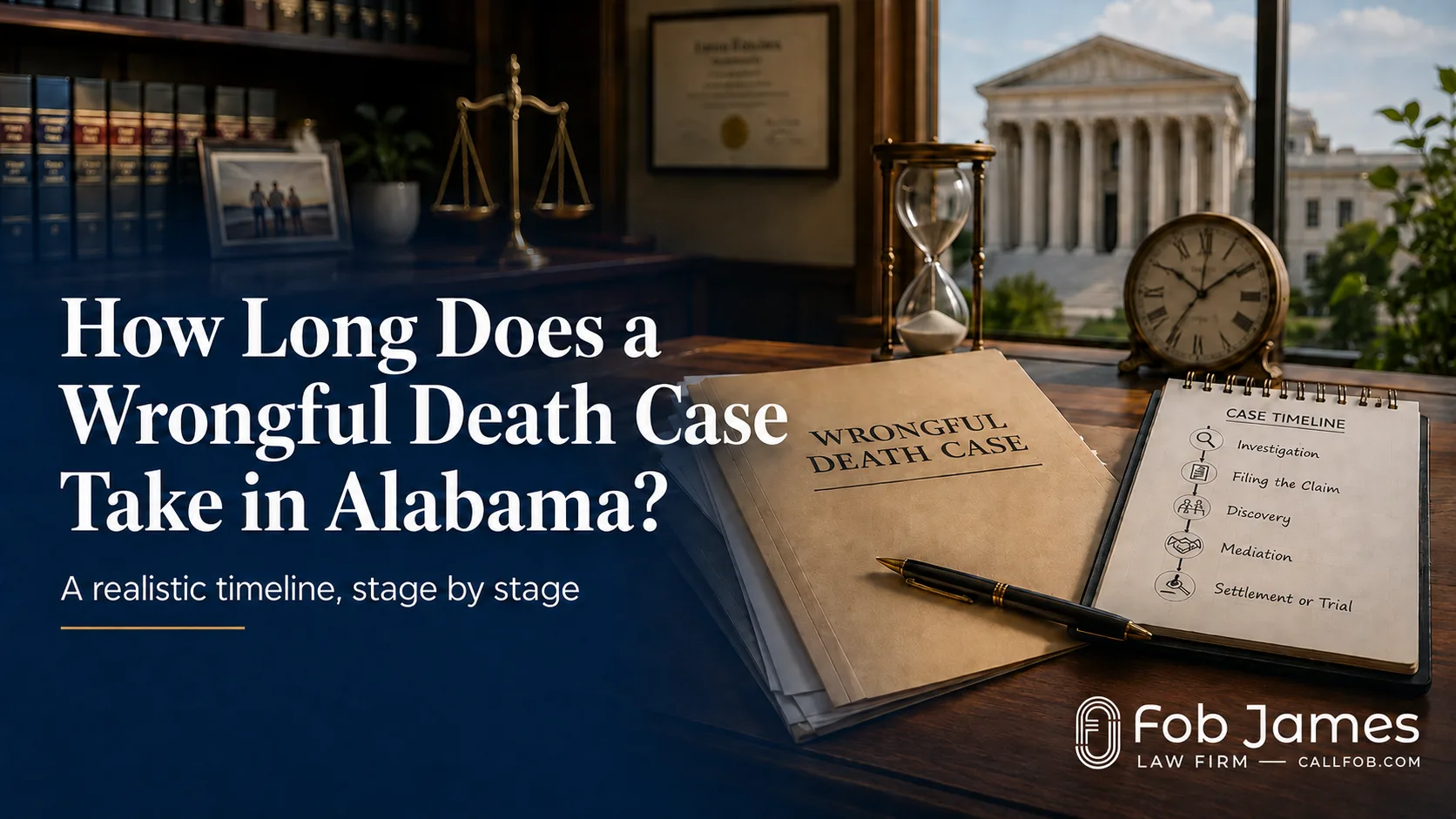
Most Alabama wrongful death cases resolve within one to three years, with strong, clear-liability cases sometimes settling in under a year and complex corporate cases running longer. But the honest answer is that the timeline is built from stages, each with its own clock, and families who understand the stages stop feeling lost inside the process. Here is the real schedule, stage by stage.
Alabama Wrongful Death Timeline: At a Glance
- Probate appointment: a few weeks to several months to get the personal representative in place
- Investigation: 1–4 months of evidence work that determines everything after it
- Pre-suit resolution: strong cases can settle in 6–12 months total
- Litigation: filed cases commonly run 1–3 years through discovery and mediation
- The 2-year filing deadline runs the whole time, regardless of negotiations
Stage 1: The Probate Step (Weeks–Months)
Because only the estate’s personal representative can file, the case begins in probate court, a few weeks to a few months of paperwork we prepare and advance the costs for, running in parallel with the investigation so no time is lost. Our guides to who can file and how filing works step by step cover this stage.
Stage 2: Investigation (1–4 Months)
Alabama wrongful death value is driven by conduct evidence, so this stage decides the case: preservation letters, crash data and video, corporate records, staffing files, experts. Rushing it costs money; skipping it costs everything. It is also why the strongest settlements often come from cases that were prepared as if for trial from day one.
Stage 3: Demand and Negotiation (1–3 Months)
With the investigation done, a demand goes to every defendant and insurer. Clear-liability cases with adequate coverage often resolve here, commonly six to twelve months after the death, without a lawsuit ever being filed. Insurers pay attention to which firms actually try cases, and price accordingly.
Stage 4: Litigation, If Needed (1–3 Years)
When defendants won’t pay fair value, suit is filed, within the strict two-year window, and the case moves through discovery, depositions, and mediation. Most filed cases still settle before trial, priced by what a jury would likely do. Corporate defendants, multiple parties, and disputed liability extend the schedule; strong conduct evidence compresses it.
Stage 5: Resolution and Distribution (Weeks)
After settlement or verdict, the fee and advanced costs are paid, court approval is obtained where minors share in the recovery, and the money passes directly to the heirs under Alabama’s distribution statute, creditor-proof, as our guide to who gets the money explains.
What Makes Cases Faster or Slower
Faster: clear liability, preserved evidence, adequate insurance, a prepared file. Slower: disputed fault under Alabama’s contributory negligence rule, multiple corporate defendants, coverage fights, and, the one families control, delay in starting. The two-year deadline never pauses for negotiations, and evidence disappears in months, so the single biggest timeline decision is when you make the first call.
Frequently Asked Questions
How long does a wrongful death settlement take in Alabama?
Strong cases with clear liability often settle six to twelve months after the death; litigated cases commonly take one to three years. The investigation phase determines most of what follows, so early preparation shortens everything.
Does filing a lawsuit slow things down?
Sometimes it speeds things up: defendants who face a trial date and a prepared file frequently pay what they refused to pay pre-suit. Filing also protects the claim against the two-year deadline while negotiations continue.
When does the family actually receive the money?
Typically within weeks of a finalized settlement, after the fee, costs, and any court approval for minors’ shares, with the recovery passing directly to the heirs by statute, free of the deceased’s debts.
Get a Realistic Timeline for Your Case, Free
The Alabama wrongful death lawyers at Fob James Law Firm will walk your family through the likely schedule for your specific facts in a free consultation, and our guides to how these cases work and the filing deadlines fill in the rest. Call (205) 407-6009 or contact us online.

Fob James, IV
Fob James obtained a B.S., in software engineering from Auburn University and then continued his education by getting his J.D. from Vanderbilt University School of Law. After working for a large national firm for several years, Fob found that his passion was fighting for individuals who have been seriously injured or wronged by others. Fob believes that the jury is the great equalizer to the power and influence that large corporations have in society. Many of Fob’s cases are high profile and have been featured in, among others: Bloomberg News, PlanAdvisor, AL.com, PlanSponsor, InsuranceJournal, and BusinessInsider. For his work in obtaining numerous multi-million dollar outcomes for his clients, Fob has been recognized by: National Trial Lawyers Top 100, SuperLawyers Rising Star (2020-2026), Birmingham Business Journal Who’s Who in Law (2023-2025), and TrustAnalytica – Top Personal Injury Lawyers in Alabama.