
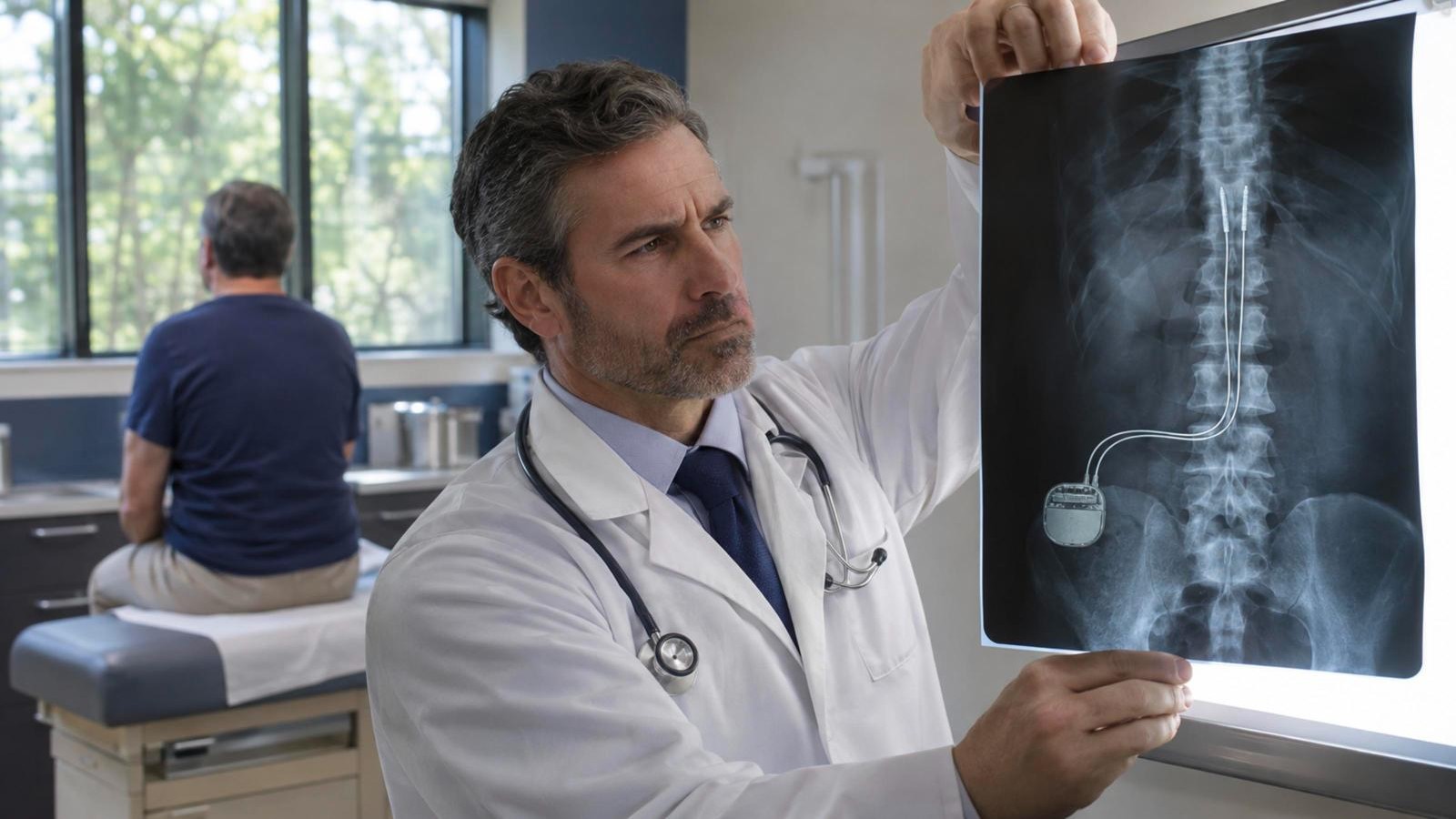
Alabama Spinal Cord Stimulator Lawsuit November 2026 Status: 113 stimulator lawsuits were pending in three federal MDLs on November 2, 2026: Boston Scientific (MDL 3181, 62 cases), Abbott (MDL 3194, 27) and Nevro (MDL 3195, 24). Medtronic cases are not centralized. No case has been tried or settled. Alabama patients generally have two years from the date of the injury to file under Ala. Code § 6-2-38, and Alabama does not add time because the cause was discovered later. Call (205) 407-6009 for a free case review.
Alabama patients injured by a spinal cord stimulator have two years to file a lawsuit, and Alabama starts that clock when the injury happens, not when the patient figures out what caused it. If a Boston Scientific, Abbott, Nevro or Medtronic stimulator has shocked or burned you, migrated, quit working or had to be revised or removed, you may have a claim against the manufacturer, and the date the trouble began matters as much as the injury itself.
This page explains how Alabama law applies to the national litigation: the two-year deadline, the damages rules, the defenses Alabama gives manufacturers, and where an Alabama case is heard. The devices, the injuries and the three federal proceedings are covered in our main spinal cord stimulator lawsuit guide. Fob & Foster Personal Injury Lawyers are a Birmingham firm, and the call is free: (205) 407-6009.
Filing Deadline Warning: Alabama’s two years usually begin when the stimulator first injures you, not when it is removed and not when you learn why it failed. A wrongful death claim must be filed within two years of the death. Months spent on reprogramming visits count against you. Call (205) 407-6009 or toll-free (866) 837-1010 to have your dates checked.
The Spinal Cord Stimulator Litigation and Alabama Patients
Patients across the country allege that stimulator manufacturers brought heavily modified devices to market through the FDA’s supplement process without new clinical testing, did not warn of the rate of shocks, burns, lead migration and device failure, and let company sales representatives make treatment decisions. In 2026 the federal courts sorted the cases by manufacturer into three multidistrict litigations: MDL 3181 for Boston Scientific in the Central District of California, MDL 3194 for Abbott in the Northern District of Illinois, and MDL 3195 for Nevro in the Northern District of California. Medtronic cases have no MDL. As of November 2, 2026, 113 cases were pending in the three proceedings. No case has been tried and none has settled.
An Alabama patient’s lawsuit goes into the proceeding for the company that made the device, but Alabama law decides whether it was filed on time, what has to be proved and what can be recovered.
Alabama’s Two-Year Deadline
Ala. Code § 6-2-38(l) requires an action for injury to the person to be brought within two years. For most injury claims Alabama has no general discovery rule: the cause of action accrues when the plaintiff first suffers a legal injury, even if the plaintiff does not yet know who or what is to blame. That makes Alabama stricter than its two-year number suggests, and stricter than Georgia, Tennessee or North Carolina on the question of when the clock starts.
For a stimulator patient the injury is usually not the implant surgery. It is the first harm the device causes afterward: the first shocks or burns, the lead migration, the loss of therapy that sends you back to the doctor. A patient who put up with a malfunctioning device for a year and a half before the removal surgery may have only months left, not two years from the removal.
The fraud exception
Alabama does delay the clock for one kind of claim. Under Ala. Code § 6-2-3, a claim based on fraud does not accrue until the plaintiff discovers the fraud, or should have discovered it, and the plaintiff then has two years. The stimulator complaints include fraud and concealment counts, so the exception may help some Alabama patients, but it is narrow, it has to be pleaded with specifics, and it should never be the plan. The plan is to file within two years of the first injury.
How the deadline plays out
These are illustrations only.
- A Birmingham patient implanted in 2022 begins getting painful jolts in January 2025 and has the device removed in May 2026. The manufacturer will say the two years began in January 2025 and end in January 2027.
- A Huntsville patient’s lead fractures in September 2026 and is replaced the next month. The two years most likely run from September 2026.
- A Mobile patient’s stimulator has “never really worked” since 2021. Without a later, distinct injury, a claim based on the original failure is probably too late.
A federal court has already enforced deadlines like these in this litigation. In July 2026 a judge in Minnesota dismissed Medtronic stimulator plaintiffs whose claims were late under their home states’ law, counting from when the device first gave them reason for concern and not from the explant. For a Boston Scientific device, filing directly into MDL 3181 stops the clock on the filing date.
Is There an Outer Limit in Alabama?
Alabama has no product liability statute of repose in force of the kind Georgia, Tennessee and North Carolina have; the one the legislature passed in 1979 was struck down by the Alabama Supreme Court. What remains is Alabama’s common-law rule of repose, which bars claims twenty years after they could first have been brought. For stimulator patients that is rarely the problem. The two-year rule, with its early start, is.
What an Alabama Patient Has to Prove
Alabama’s product liability law is the Alabama Extended Manufacturer’s Liability Doctrine, or AEMLD. The patient must show that the manufacturer sold the device in a defective condition that made it unreasonably dangerous, that it reached the patient without substantial change, and that the defect caused the injury. Negligence, failure to warn, breach of warranty and fraud claims are usually pleaded alongside it, and wantonness, meaning a conscious disregard of a known danger, where the evidence supports it.
Two Alabama rules shape a device case. Under the learned intermediary doctrine, a device manufacturer’s duty to warn runs to the implanting physician, not directly to the patient, so the question is what the company told your doctor and whether a full warning would have changed the doctor’s decision. That makes the sales representative’s role important: plaintiffs in this litigation allege that representatives were the main source of what doctors and patients heard about these devices. And expert testimony is required. A stimulator claim needs an engineer or physician who can say what failed and why.
Defenses That Matter in Alabama
Federal preemption. The manufacturers’ lead argument everywhere is that FDA premarket approval bars state-law claims about a device’s design and labeling under Riegel v. Medtronic. Claims that the manufacturer violated the FDA’s own requirements can survive. See the national guide for how the courts have ruled so far.
Contributory negligence. Alabama is one of the few states where a plaintiff’s own negligence, however slight, is a complete defense to a negligence claim, and it is also a defense under the AEMLD when it relates to how the plaintiff used the product. In a stimulator case the manufacturer will look for missed follow-up visits, charging the device against instructions, or activity that the patient was told to avoid. Contributory negligence is not a defense to wantonness, which is one reason the manufacturer’s knowledge matters.
Causation. Stimulator patients have serious spinal conditions to begin with. The manufacturer will argue that the pain, weakness or nerve symptoms come from the underlying disease or from earlier surgery. Imaging that shows a moved or broken lead, programming records and the surgeon’s findings at revision are the evidence that answers it.
What Alabama Law Allows You to Recover
Alabama does not cap compensatory damages in a product liability case. A patient can recover the cost of the revision and removal surgeries and other medical care, future treatment, lost income and earning capacity, and damages for pain, suffering, mental anguish and permanent impairment. A spouse can recover for loss of consortium.
Punitive damages are available when the plaintiff proves by clear and convincing evidence that the manufacturer acted wantonly, fraudulently or with malice. Under Ala. Code § 6-11-21, in a physical injury case they are capped at the greater of three times compensatory damages or $1.5 million, a figure the statute adjusts for inflation.
If the Patient Has Died: Alabama Wrongful Death
Alabama’s wrongful death statute, Ala. Code § 6-5-410, works differently from every other state’s. The claim belongs to the personal representative of the estate, who must be appointed by the probate court, and it must be filed within two years of the death. The only damages allowed are punitive: the jury is asked to punish the wrongdoing and deter it, not to value the life or the family’s loss, and the cap on punitive damages does not apply. If a stimulator complication contributed to a death in your family, the first step is opening the estate.
Where an Alabama Case Is Filed and Tried
The shared pretrial work happens in the MDL for your device’s manufacturer, and you do not attend. A Boston Scientific case can be filed directly in the MDL in California. An Abbott or Nevro case is filed in federal court and transferred. If a case is not resolved in the MDL, it comes home for trial to the federal district where it belongs: the Northern District of Alabama, which sits in Birmingham, Huntsville and other northern cities; the Middle District in Montgomery; or the Southern District in Mobile. A Medtronic case has no MDL and is filed individually.
Who May Qualify in Alabama
- You have, or had, a permanent spinal cord stimulator made by Boston Scientific, Abbott (or St. Jude Medical), Nevro or Medtronic.
- The device shocked or burned you, the leads moved or broke, the therapy failed, you developed a serious infection, or you have new nerve, bowel or bladder problems.
- You needed a revision, a replacement or a removal, a hospital admission or repeated reprogramming, or your doctor told you to turn the stimulator off.
- The first of those problems began less than two years ago.
Medicare, Alabama Medicaid and Your Medical Bills
Whoever paid for the implant and the later surgeries, whether Medicare, Alabama Medicaid, Blue Cross or another insurer, is entitled to be repaid out of a recovery. We negotiate those repayment claims at the end of the case. Keep the explanation-of-benefits statements you receive; together they show what the device has cost.
What to Do Now
Your Health Comes First: Do not turn off, stop charging or seek removal of your stimulator because of a lawsuit or a recall notice. Those are medical decisions to make with your doctor. If you have sudden weakness or numbness, loss of bowel or bladder control, fever, or signs of infection at the implant site, get medical care right away.
- Tell your doctor about every symptom and make sure it goes in the chart, with dates.
- Locate your implant card, remote and charger. They identify the manufacturer and model.
- If the device is coming out, ask the surgeon and hospital in writing to preserve it and not return it to the manufacturer.
- Save messages from the company representative and note the date of each reprogramming visit.
- Have the dates reviewed before you assume you have two years left.
How Fob & Foster Handle Alabama Stimulator Claims
We are Alabama lawyers, based in Birmingham, and we represent people injured by defective drugs and medical devices. The first call is free. We ask about the device, the implant date, what went wrong and when, and we tell you whether the claim looks viable and how much time is left. If we take the case, we obtain the implant and operative records, confirm the manufacturer and model, and file in the right proceeding. We work on a contingency fee: no fee unless we recover money for you, and we explain the fee agreement in writing before you sign anything. Call (205) 407-6009 or send us a message.
Alabama Spinal Cord Stimulator Lawsuit FAQs
How long do I have to file a spinal cord stimulator lawsuit in Alabama?
Two years under Ala. Code § 6-2-38. Alabama generally starts the two years when the device first injures you, not when you learn the device was the cause and not when it is removed. A fraud claim can run from discovery of the fraud under § 6-2-3, but that exception is narrow.
Does Alabama have a discovery rule for defective medical devices?
Not a general one. Unlike most states, Alabama does not delay the deadline until the patient discovers the cause of an injury, except for fraud claims and a few categories set by statute. That is why Alabama patients should count from the first shock, burn, migration or failure.
Can I still recover if the manufacturer says I misused the device?
It depends on the proof. Contributory negligence in the use of a product is a complete defense to negligence and AEMLD claims in Alabama, so the manufacturer will raise it if it can. It is not a defense to wantonness, and it requires evidence that you were actually careless, not just that you used the device.
Is there a cap on damages in an Alabama stimulator case?
Not on compensatory damages. Punitive damages in a physical injury case are capped at the greater of three times compensatory damages or $1.5 million, adjusted for inflation, under Ala. Code § 6-11-21. The cap does not apply to wrongful death.
Where will my Alabama case be heard?
Pretrial proceedings are in the federal MDL for your device’s manufacturer: California for Boston Scientific and Nevro, Illinois for Abbott. If the case goes to trial it returns to the federal court for your part of Alabama: the Northern, Middle or Southern District. You do not travel for the MDL.
Can I sue the doctor who implanted my stimulator?
These lawsuits are against the manufacturers, not the doctors. A claim that the surgery itself was done negligently would be a medical malpractice case under the Alabama Medical Liability Act, with different rules and a different deadline.
Has any Alabama spinal cord stimulator case settled?
No. There has been no settlement or verdict in a spinal cord stimulator product liability case anywhere in the country. The federal MDLs were created in June and October 2026 and have not set trial dates.
What does it cost to hire Fob & Foster?
Nothing up front. The consultation is free, and we handle spinal cord stimulator claims on a contingency fee, so there is no fee unless we recover money for you.
Related Practice Areas
- Spinal Cord Stimulator Lawsuit (National Guide)
- Georgia Spinal Cord Stimulator Lawsuit
- Tennessee Spinal Cord Stimulator Lawsuit
- North Carolina Spinal Cord Stimulator Lawsuit
- Spinal Cord Stimulator Lawsuit Update
- Spinal Cord Stimulator Verdicts and Settlements
- Bard PowerPort Lawsuit
- AngioDynamics Port Catheter Lawsuit
- Medtronic Bravo Capsule Recall Lawsuit
- Defective Products Lawyers