
 Alabama Accident News
Jefferson County, Alabama | August 13, 2026
A 35-year-old Birmingham man riding a motorcycle was killed on the afternoon of Tuesday, August 11, 2026, when his bike and another vehicle collided at Crestwood Boulevard and Frederick Street on Birmingham’s east side. He was the only person on the motorcycle. Emergency crews transported him to UAB Hospital, where he was pronounced dead at 4:01 p.m., roughly 35 minutes after the collision. The Birmingham Police Department is investigating.
Our condolences go to his family, his friends, and the riders who knew him. Nothing written here changes what that intersection took from them. We publish this because families in their position are usually left holding a report number and very little else, and the questions that follow a fatal motorcycle crash in Alabama have answers that are worth knowing early.
What Happened on Crestwood Boulevard
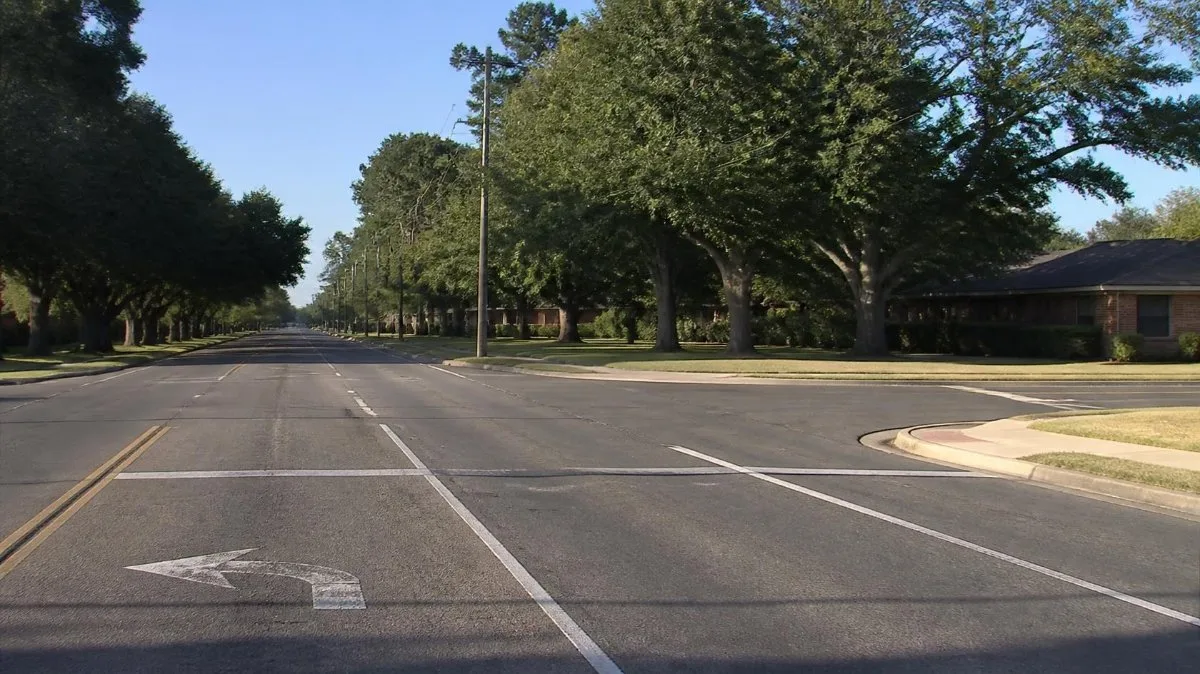
According to the Jefferson County Coroner’s Office and reporting from Birmingham-area outlets, the crash occurred at approximately 3:26 p.m. at the intersection of Crestwood Boulevard and Frederick Street. The rider, a 35-year-old Birmingham man, was the sole occupant of the motorcycle. He was taken to UAB Hospital and pronounced dead at 4:01 p.m. Birmingham Police are investigating the circumstances.
Crestwood Boulevard is a multi-lane east Birmingham arterial fed by a long series of residential cross-streets, of which Frederick Street is one. Mid-afternoon on a weekday puts that corridor at the front edge of the evening commute, with turning movements happening across through traffic at intersections that do not all carry signals.
As of this writing, investigators have not publicly released which vehicle had the right of way, what direction either was traveling, whether any citations were issued, or what caused the two to meet. That is not unusual three days out. It does mean that anyone claiming to know who was at fault right now is guessing.
One point deserves emphasis, because it trips up families constantly. Local coverage has described the collision in different ways, some saying the motorcycle struck a vehicle and others saying the two collided. When a police agency or ALEA says one vehicle struck another, it is describing the physical sequence of the impact. It is not a finding of legal fault. A rider proceeding lawfully through an intersection is very often the vehicle that makes contact when a driver turns across his path. Liability turns on who violated a duty of care, not on which vehicle hit which.
Who May Be Liable
Until Birmingham Police release the crash report, responsibility for this collision is genuinely open. But the categories a lawyer would work through in an intersection crash between a motorcycle and a passenger vehicle are well defined, and they are worth understanding before an insurer starts shaping the narrative.
The other driver. The dominant cause of fatal motorcycle-versus-vehicle crashes at intersections is a driver turning left across a rider’s path, or pulling out from a side street into traffic the driver never registered. Alabama drivers owe a duty to yield before turning across oncoming traffic and to maintain a proper lookout for everything on the road, motorcycles included. A driver who breached that duty is liable no matter how sincerely he says he did not see the bike. In these cases, “I never saw him” is rarely a defense — it is usually the admission.
The rider. In a contributory negligence state this has to be said plainly rather than buried. If evidence shows the rider was speeding, ran a light, or split lanes, the defense will build its entire case around it. Nothing in the public reporting suggests any of that occurred here. But the absence of a stated cause cuts both directions, and an honest evaluation starts with finding out what the rider was doing in the seconds before impact rather than assuming it was nothing.
An employer. If the other vehicle was being driven in the course of work, whether a delivery, a service call, or a company car on a job errand, the employer may be vicariously liable for its driver’s negligence. This frequently matters more than the driver’s own policy limits, because commercial coverage tends to be substantially larger.
A roadway authority or contractor. Obstructed sight lines, a malfunctioning or badly timed signal, faded lane markings, and overgrown vegetation at a corner can all contribute to an intersection collision. Claims against governmental entities are difficult and carry notice deadlines far shorter than the ordinary statute of limitations, which is precisely why the intersection should be photographed and measured before conditions change.
A manufacturer. Uncommon, but a brake failure, a tire defect, or a steering component failure on either vehicle converts a driver-error case into a defective products case. It is one more reason both vehicles need to be preserved rather than released to salvage.
Wrongful Death Rights Under Alabama Law
Alabama’s wrongful death statute, Ala. Code § 6-5-410, does not work the way most people expect, and families are regularly surprised by it.
Only the personal representative of the deceased person’s estate may bring the claim. Not the spouse in her own name, not the parents, not the children. The cause of action belongs to the estate’s representative, who pursues it on behalf of the heirs. Opening an estate in probate court is therefore a practical prerequisite to filing, and it is a step that consumes time precisely when a family has the least of it to give.
The deadline is two years, and it runs from the date of death, not the date of the crash. Ala. Code § 6-5-410(d). Where someone dies at the scene, those dates are the same. Where someone survives hours, days, or months, they are not, and misreading which date controls has ended otherwise strong cases. In this crash the rider died the same afternoon, so the two dates converge.
Alabama also retains pure contributory negligence, a common-law doctrine that all but a handful of states abandoned decades ago. Under Golden v. McCurry, 392 So. 2d 815 (Ala. 1980), a plaintiff whose own negligence contributed to the injury recovers nothing at all, even if that contribution was slight. There is no 51 percent threshold and no proportional reduction of the award. It is an all-or-nothing rule, and it explains why Alabama crash litigation is fought over fault far more than over the size of the loss. It also explains why an insurer’s early theory about what a rider did wrong should never be shrugged off. It has to be answered with evidence.
How Alabama Wrongful Death Damages Are Assessed
Here Alabama stands alone among the states. In a wrongful death case, an Alabama jury awards punitive damages only.
That means the verdict is not measured by the income the family will never receive, not by the medical bills, not by the funeral expenses, and not by the grief. Those familiar categories, the ones nearly every other state’s wrongful death law is built around, are not what the jury is asked to weigh. The jury is asked how culpable the defendant’s conduct was, and it returns a number meant to punish that conduct and deter others from repeating it.
The consequences are counterintuitive. Two families who lost the same person in the same crash have the same claim whether that person earned thirty thousand dollars a year or three hundred thousand. And a case built on genuinely reckless conduct, such as a driver who was texting, impaired, or racing, can support a far larger verdict than a case of ordinary inattention, even where the loss to the family is identical.
Because the award is punitive rather than compensatory, the proceeds do not belong to the estate in the usual sense. They pass to the heirs under Alabama’s statute of distribution and are not reachable by the deceased person’s creditors. Families sometimes delay talking to a lawyer because they fear a recovery would be swallowed by medical liens or old debts. In an Alabama wrongful death case, that fear is misplaced.
Had the rider survived with serious injuries, an entirely different framework would govern. A personal injury claim carries a two-year deadline measured from the crash date under Ala. Code § 6-2-38(l), and it allows compensatory damages for medical expenses, lost earnings, and pain and suffering. The same collision can produce two very different cases depending on whether the injured person lives, which is one of the harder truths in this area of Alabama law.
What Families of Motorcycle Riders Should Know
Expect the bias, and expect it early. Adjusters approach motorcycle fatalities carrying a set of assumptions: that the rider was speeding, weaving, showing off. Those assumptions get written into the claim file within days, and in a contributory negligence state they are worth real money to the insurer. Documented evidence rebuts them. Indignation does not.
The helmet question is not the seat belt question. Alabama requires protective headgear for motorcycle riders under Ala. Code § 32-5A-245, and families often assume the legal effect of helmet use mirrors the rule for seat belts. It does not. For seat belts, Alabama law is explicit: under Ala. Code § 32-5B-7, non-use is not admissible as evidence of contributory negligence and does not limit an insurer’s liability. The helmet statute contains no equivalent protective language. That difference is worth raising with a lawyer rather than assuming an answer in either direction.
Preserve the motorcycle. Salvage yards move quickly, and insurers sometimes total and dispose of a bike before anyone has inspected it. The motorcycle is evidence. It carries the impact angle, the crush pattern, the marks that indicate speed, and any sign that a component failed. Once it is gone, it does not come back, and the defense will happily litigate a case in which the only physical evidence left is their own vehicle.
Get the crash report, then read it critically. The Birmingham Police report will contain the officer’s diagram, witness names and contact information, and any citations issued. It is a starting point, not a verdict, and officers reconstructing a crash after the fact sometimes get the sequence wrong. Our guide to obtaining an Alabama crash report explains how to request it.
Be careful with the recorded statement. An adjuster will call, often within the first week, and will be warm and genuinely sympathetic. The questions are still not idle. “How fast did he usually ride?” is a contributory negligence question in a friendly voice. You are not obligated to give a recorded statement to the other driver’s insurer, and there is rarely a reason to do so before you understand the facts yourself.
Look for every policy, not just the obvious one. Beyond the at-fault driver’s liability coverage, there may be uninsured and underinsured motorist coverage on the rider’s own policy, on a household member’s policy, or on another family vehicle. Alabama insurers must offer uninsured motorist coverage under Ala. Code § 32-7-23. In fatal crashes involving a minimum-limits driver, stacked UM coverage is frequently the difference between a nominal recovery and a meaningful one, and it is the coverage families most often fail to look for.
Taking the First Step Toward Answers
In the first week, almost no family is looking for a lawsuit. They are looking for someone to tell them what actually happened at that intersection.
“In a fatal motorcycle case, the story the insurance company intends to tell is usually written in the first two weeks, before the family has even held the funeral. The rider is not there to give his version, and everyone else at that intersection has a reason to shade theirs. Our job is to reach the evidence before it disappears and make sure the record reflects what happened, not what an adjuster assumed happened. A family should not have to take the other side’s word for how their son died.”
Fob James, IV
If your family lost someone or was injured in this crash, or in another collision on Crestwood Boulevard, First Avenue North, U.S. 78, or anywhere in the Birmingham metro, Fob James Law Firm offers free, no-obligation consultations. We handle these cases on contingency, which means no fee unless we recover for you. Call 205-407-6009 to speak with a Birmingham motorcycle accident lawyer about your situation. There is no cost to ask, and no obligation that follows the conversation.
You can also read more about our work on Alabama wrongful death claims, our approach to Birmingham car accident cases, and how we serve families throughout Birmingham and the surrounding communities, including Trussville and Homewood.
Local Resources for Jefferson County Crash Victims and Families
The following contacts may be useful to families dealing with the aftermath of a fatal crash in Birmingham. Every number below was verified against the agency’s own published source.
- Birmingham Police Department (non-emergency): 205-328-9311 — the investigating agency for this crash.
- Birmingham Police Department headquarters: 205-254-1700 — for records and crash report requests.
- Birmingham Police East Precinct: 205-254-2685 — the precinct serving the Crestwood area.
- Jefferson County Coroner / Medical Examiner: 205-930-3603.
- UAB Hospital: 205-934-4011 — the Level I trauma center serving the Birmingham metro.
- Alabama Crime Victims Compensation Commission: 1-800-541-9388 — may assist with funeral and burial costs in qualifying cases.
- Crisis Center of Birmingham (24-hour crisis line): 205-323-7273 — free, confidential support for families in crisis.
- Jefferson County District Attorney’s Office, Birmingham Division: 205-325-5252 — victim services and case status inquiries.

Fob James, IV
Fob James obtained a B.S., in software engineering from Auburn University and then continued his education by getting his J.D. from Vanderbilt University School of Law. After working for a large national firm for several years, Fob found that his passion was fighting for individuals who have been seriously injured or wronged by others. Fob believes that the jury is the great equalizer to the power and influence that large corporations have in society. Many of Fob’s cases are high profile and have been featured in, among others: Bloomberg News, PlanAdvisor, AL.com, PlanSponsor, InsuranceJournal, and BusinessInsider. For his work in obtaining numerous multi-million dollar outcomes for his clients, Fob has been recognized by: National Trial Lawyers Top 100, SuperLawyers Rising Star (2020-2026), Birmingham Business Journal Who’s Who in Law (2023-2025), and TrustAnalytica – Top Personal Injury Lawyers in Alabama.