 Alabama Accident News
Alabama Accident News
Two men were killed Tuesday evening when an Amtrak passenger train struck their pickup truck at a railroad crossing in Bessemer. The fatal collision, which occurred at approximately 5:22 p.m. on June 30, 2026, at the crossing of 32nd Street and Carolina Avenue, claimed the lives of both occupants of the truck. The Bessemer Police Department is investigating the circumstances of the crash, which occurred at a crossing equipped with active warning gates and signals.
Fob James Law Firm extends its deepest condolences to the families and loved ones of the victims.
What Happened at the Carolina Avenue Crossing
At approximately 5:22 p.m. on Tuesday, June 30, 2026, a pickup truck was traveling eastbound on 32nd Street in Bessemer when it entered the railroad crossing in the 3200 block of Carolina Avenue and was struck on its passenger side by an Amtrak passenger train. According to the Bessemer Police Department, both male occupants of the truck were pronounced dead at the scene. No life-threatening injuries were reported among the passengers or crew aboard the train.
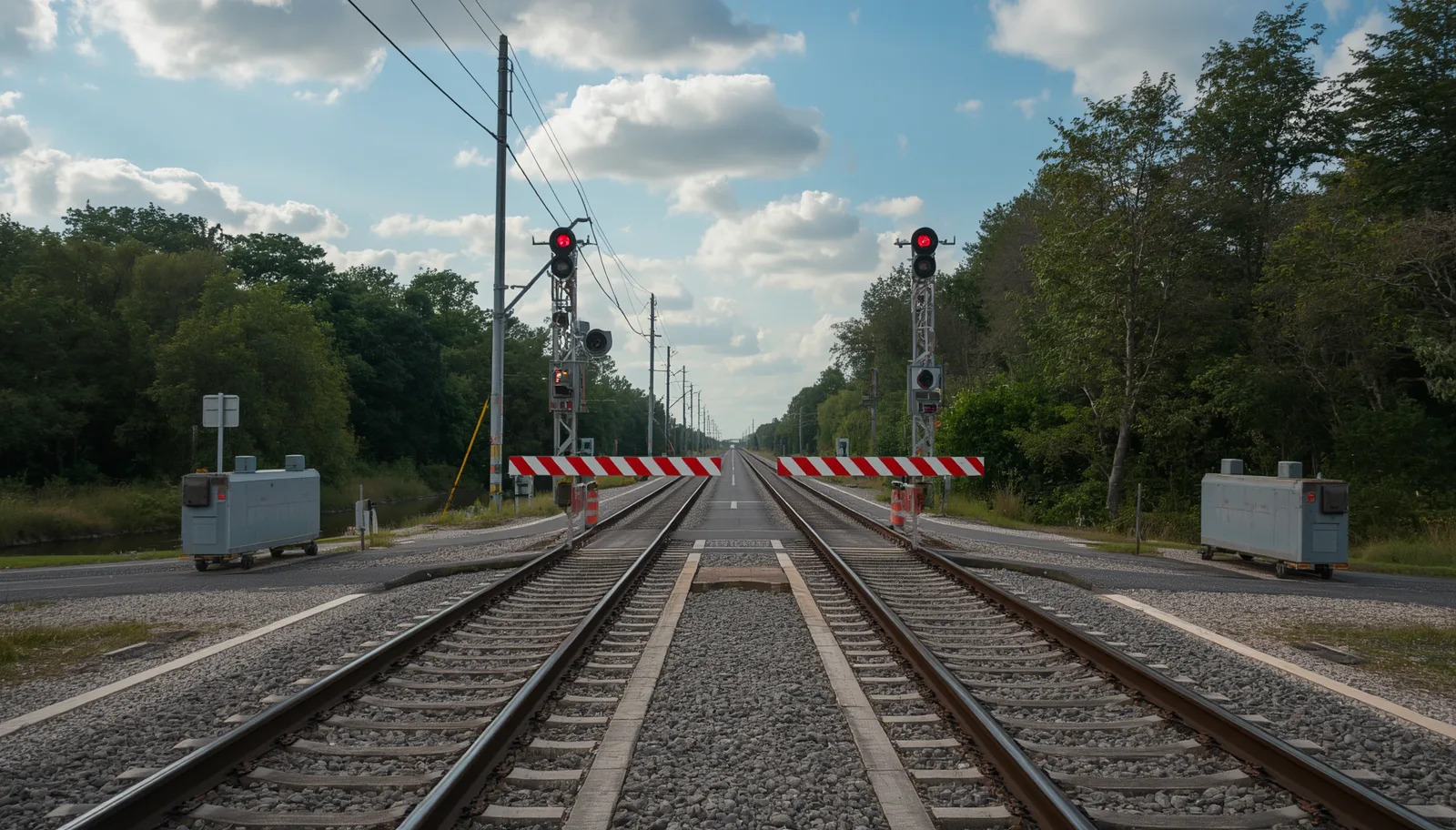
When officers arrived at the scene, the railroad crossing arms were down and the signal lights were flashing. The Jefferson County Coroner’s Office identified one of the victims and confirmed that both men died as a result of the collision. Bessemer Fire Chief Kendric Hughley and Police responded to the scene, and rail operations on the line were temporarily suspended while investigators documented the crash and emergency crews cleared the wreckage.
The Bessemer Police Department’s investigation into the crash is ongoing. An official crash report will document the findings once the investigation concludes.
Understanding Liability at Railroad Crossings in Alabama
Railroad crossing collisions occupy a distinct and complex area of Alabama personal injury law. Unlike a typical vehicle-on-vehicle crash, a collision between a train and a road vehicle involves questions of federal railroad regulation, crossing design and maintenance, warning system functionality, and the shared responsibilities of both the railroad and the driver.
When officers report that the crossing gates were down and the warning lights were flashing at the time of a crash, that observation is significant to the liability analysis, but it is not the end of the inquiry. A thorough investigation must still examine a range of factors that can bear on responsibility:
- Whether the warning system activated with adequate lead time. Federal standards require that active warning devices provide a minimum warning time before a train reaches the crossing. If the gates and lights activated too late, or malfunctioned in the moments before the crash, that could establish negligence on the part of the railroad or the entity responsible for maintaining the crossing.
- Whether the crossing had adequate sight lines. Vegetation, structures, parked rail cars, or other obstructions that limit a driver’s ability to see an approaching train can contribute to a crossing collision and may implicate the railroad’s maintenance obligations.
- Whether the train sounded its horn. Federal regulations require trains to sound an audible warning on approach to a public crossing. Whether that warning was given, and when, is a standard element of any crossing investigation.
- Whether the crossing itself was reasonably safe. Some crossings carry a documented history of collisions or near-misses. When a crossing is known to be dangerous and the responsible parties have failed to upgrade warning systems, improve sight lines, or take other corrective measures, that failure may give rise to liability.
- The train’s speed and whether it was operating within authorized limits for that segment of track.
Railroad crossing cases are governed by a combination of Alabama law and federal regulations administered by the Federal Railroad Administration (FRA). These cases frequently require specialized accident reconstruction and the prompt preservation of evidence, including the train’s event recorder (the rail equivalent of a “black box”), signal maintenance logs, and crossing inspection records. Much of this evidence is in the exclusive control of the railroad, which makes early legal involvement especially important.
Wrongful Death Rights for the Victims’ Families Under Alabama Law
For the families of the two men killed at the Carolina Avenue crossing, Alabama law provides a means of pursuing accountability through a wrongful death claim under Alabama Code § 6-5-410. The personal representative of each victim’s estate may bring a separate civil action against any party whose negligence contributed to the deaths.
Alabama’s wrongful death statute is unlike nearly every other state’s. In most jurisdictions, wrongful death damages compensate families for economic losses such as lost income and funeral expenses. In Alabama, wrongful death damages are exclusively punitive, designed to punish the wrongdoer and deter similar conduct. This distinction carries important practical implications:
- The damages award is not capped by the victim’s age, earnings, or economic contribution. It is determined by the degree of the defendant’s wrongdoing.
- If the railroad, a maintenance contractor, or another party failed to meet its safety obligations, and that failure contributed to the deaths, those facts directly bear on the potential punitive damages award.
- Because two people were killed, each family may pursue a separate wrongful death claim.
The statute of limitations for wrongful death claims in Alabama is two years from the date of death (Ala. Code § 6-5-410). However, in railroad cases the most critical actions, including preserving the train’s event recorder data, signal maintenance records, and crossing inspection logs, must begin immediately, as this evidence is controlled by the railroad and can be difficult to obtain without prompt legal action.
Understanding How Alabama Wrongful Death Damages Are Assessed
Because Alabama’s wrongful death framework is punitive rather than compensatory, juries are instructed to weigh the totality of the wrongdoer’s conduct in determining an appropriate damages award, rather than applying a fixed formula based on the victim’s earnings.
Factors that Alabama juries have historically considered include the degree of negligence in the responsible party’s conduct, whether a party violated a safety regulation or industry standard, the party’s awareness of a known danger, and whether the party failed to take reasonable corrective action. In a railroad crossing case, the adequacy of the warning system, the condition of the crossing, and the railroad’s compliance with federal safety standards all become central to the question of accountability. An experienced wrongful death attorney can investigate these issues and pursue the full measure of accountability from every responsible party.
What Families Should Know About the Investigation Process
Railroad crossing collisions are investigated differently than ordinary traffic crashes. In addition to the Bessemer Police Department, the railroad’s own investigators and safety personnel typically respond to the scene, and their priority is to protect the railroad’s interests. Critical evidence, including the train’s event recorder and the crossing’s signal maintenance history, is in the railroad’s control.
Families should be aware that the railroad and its insurers may move quickly to shape the narrative around a crossing collision, often emphasizing driver responsibility while limiting outside access to the evidence that would reveal whether the warning system and crossing were functioning properly. Because so much of the relevant evidence is controlled by the railroad, the single most important step a grieving family can take is to retain experienced legal counsel promptly. An attorney can issue immediate legal holds to preserve the train’s data and the crossing’s maintenance records, engage qualified rail-crossing reconstruction experts, and ensure the investigation examines every potential source of liability, not just the conduct of the driver.
Taking the First Step Toward Justice
“When two men lose their lives at a railroad crossing, their families deserve a complete and independent investigation into what happened, not just the railroad’s version of events. Even when the gates are reported to be down, there are critical questions that only a thorough investigation can answer. Did the warning system activate in time? Were the sight lines clear? Had this crossing been the site of problems before? The evidence that answers those questions is largely in the railroad’s hands, which is exactly why families need an advocate who knows how to preserve it and demand it. If your family has been affected by this tragedy, please reach out as soon as possible.”
— Fob H. James IV, Managing Attorney, Fob James Law Firm | J.D., Vanderbilt University | SuperLawyers Rising Star 2020–2025 | National Trial Lawyers Top 100
Fob James Law Firm represents seriously injured Alabamians and the families of wrongful death victims across the state. We serve clients throughout Bessemer, Birmingham, and all of Jefferson County. Our attorneys handle car accident and wrongful death cases on a contingency-fee basis, meaning there are no upfront costs or attorney fees unless we recover compensation for you. If you lost a loved one in this crash, we encourage you to reach out as soon as possible so that critical evidence can be preserved. Contact us at (205) 407-6009.
Local Resources for Bessemer and Jefferson County Crash Victims and Families
Jefferson County Coroner/Medical Examiner’s Office (Bessemer Division), Phone: (205) 481-4325. The Coroner’s Office issues official death certifications and identified the victims of this crash.
Bessemer Police Department, 1801 3rd Avenue North, Bessemer, AL 35020. Phone: (205) 425-2411. Emergency: 911. The Bessemer Police Department is the lead investigating agency for this crash.
Bessemer Fire & Rescue, 1800 3rd Avenue North, Bessemer, AL 35020. Phone: (205) 424-4300. Bessemer Fire & Rescue responded to the scene of the collision.
UAB Hospital, Birmingham, 619 19th Street South, Birmingham, AL 35249. Phone: (205) 934-4011. UAB is the region’s Level I Trauma Center serving the most severe injuries in Jefferson County.
Federal Railroad Administration (FRA), Office of Railroad Safety. Website: railroads.dot.gov. The FRA oversees railroad safety regulations nationwide, including standards for grade crossing warning systems, and maintains public crossing inventory and accident data.
Alabama Crime Victims Compensation Commission, P.O. Box 231267, Montgomery, AL 36123. Phone: 1-800-541-9388. Website: acvcc.alabama.gov. The ACVCC provides financial assistance to victims of violent crimes and certain fatal crashes, covering medical expenses, funeral costs, lost wages, and counseling when other sources of payment are unavailable.

Fob James, IV
Fob James obtained a B.S., in software engineering from Auburn University and then continued his education by getting his J.D. from Vanderbilt University School of Law. After working for a large national firm for several years, Fob found that his passion was fighting for individuals who have been seriously injured or wronged by others. Fob believes that the jury is the great equalizer to the power and influence that large corporations have in society. Many of Fob’s cases are high profile and have been featured in, among others: Bloomberg News, PlanAdvisor, AL.com, PlanSponsor, InsuranceJournal, and BusinessInsider. For his work in obtaining numerous multi-million dollar outcomes for his clients, Fob has been recognized by: National Trial Lawyers Top 100, SuperLawyers Rising Star (2020-2025), Birmingham Business Journal Who’s Who in Law (2023-2025), and TrustAnalytica – Top Personal Injury Lawyers in Alabama.