
 Articles
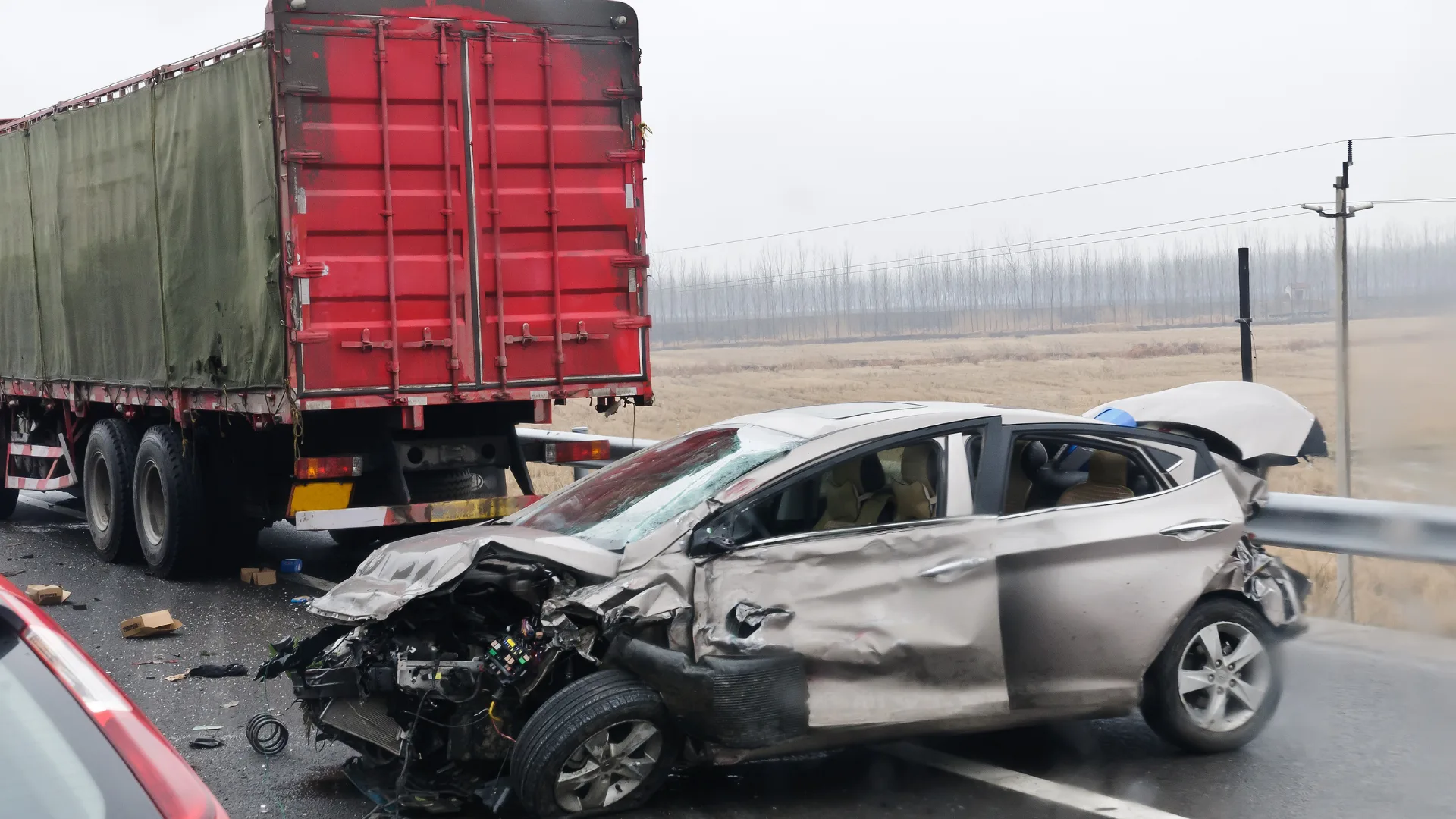
Alabama’s interstate system is a vital artery for the American freight economy. Billions of dollars worth of goods travel through Birmingham every year on corridors that connect the Gulf Coast to the Midwest, and Atlanta to the Mississippi Delta. But the same highways that keep commerce moving like Interstate 65, Interstate 20, and Interstate 59 are also the corridors where large truck crashes inflict the most damage on Alabama families.
In this article, truck accident attorney Fob James, IV maps the most dangerous truck accident hotspots along I-65 and the I-20/59 corridor, explains why these locations produce so many catastrophic collisions, and breaks down the multi-party liability issues that make trucking accident claims in Alabama uniquely complex.
If you or a family member has been hurt in a truck accident on any Alabama highway, call the Birmingham truck accident lawyers at Fob & Foster Personal Injury Lawyers for a free consultation.
Alabama’s Large Truck Crash Problem, By the Numbers
Alabama consistently ranks among the deadliest states in the nation for truck-involved crashes. The Truck Safety Coalition places Alabama in the “deadliest dozen” states for large truck fatalities, and the NHTSA reported 5,472 people killed nationally in large truck crashes in 2023 — roughly 15 deaths per day. Seventy percent of those killed were occupants of other vehicles, not the truck.
The Alabama-specific picture is equally grim. Jefferson County alone averages roughly 28,000 crashes per year, accounting for over 11% of all traffic deaths statewide. According to the Alabama Department of Transportation (ALDOT), improper lane changes are the leading cause of trucking accidents in Alabama, responsible for more than 1,100 truck crashes in a single recent reporting year. Approximately 27% of all commercial truck accidents in Alabama occur on the state’s interstates, and an average of 111 fatal truck accidents occur statewide annually.
The corridors that shoulder the greatest share of this burden are I-65 and I-20/59, especially in and around Birmingham.
I-65: Alabama’s Most Dangerous North-South Freight Corridor
Interstate 65 stretches 367 miles from Mobile to the Tennessee state line, linking six of the state’s ten largest cities. It is one of the busiest north-south freight corridors in the eastern United States, with tractor-trailers hauling steel, poultry, lumber, paper products, and consumer goods around the clock.
Between 2018 and 2022, the I-65 corridor recorded more than 80 fatal crashes and over 90 fatalities — averaging nearly three deadly crashes per mile in its most dangerous stretches. High speed limits, long rural stretches, driver fatigue, heavy freight mixing with commuter traffic, and Alabama’s severe weather patterns all contribute.
Alabama’s growing economy has steadily increased the number of large trucks on I-65. Industries that depend heavily on truck transport like steel and iron products, poultry, lumber, paper, cotton, and automotive parts from the Mercedes plant in Tuscaloosa County all generate a constant stream of commercial vehicles through these corridors.
High-Risk Zones on I-65
I-65 Between Montgomery and Birmingham (Exits 167–252). This lengthy rural stretch is characterized by long sight lines that encourage excessive speed and complacency. Drowsy truck drivers running the Mobile-to-Nashville corridor frequently lose focus here. The combination of high speed limits, minimal lighting, and inconsistent enforcement creates a deadly environment for rear-end and rollover crashes.
I-65 Through Shelby County (Exits 228–247). As I-65 enters the southern suburbs of Birmingham through Calera, Alabaster, Pelham, and Hoover, traffic volume increases rapidly and the terrain shifts to rolling hills that affect truck stopping distances. Truck underride accidents are a particular risk in this zone, where speed differentials between trucks laboring uphill and faster-moving passenger vehicles can be extreme.
I-65 at Lakeshore Parkway, Homewood (Exit 255). This interchange has been the site of frequent truck-involved crashes. A new diverging diamond interchange (DDI) is currently under construction — an acknowledgment by ALDOT that the existing configuration is inadequate for the volume and complexity of traffic it handles.
I-20/59: The East-West Freight and Commuter Corridor
Interstates 20 and 59 share a combined route for more than 145 miles across Alabama, from the Mississippi state line through Tuscaloosa and into downtown Birmingham. This corridor connects the manufacturing hubs of western Alabama with the Port of Savannah and Atlanta’s logistics network. Between 2018 and 2022, it recorded more than 70 fatal crashes and over 80 deaths, averaging roughly three crashes per mile in its worst sections.
High-Risk Zones on I-20/59
I-20/59 Between Tuscaloosa and Birmingham (Exits 73–118). A critical freight and college commuter route with congested traffic near Birmingham that transitions to high-speed rural driving outside the city limits. The sudden speed transitions and inconsistent lane configurations create persistent hazards.
“The Bloody 20” — I-20 Between Leeds and Pell City (Exits 140–158). This segment has earned one of the most ominous nicknames on any Alabama highway. Steep grades, sharp curves, and hilly topography define the terrain. Heavy truck traffic combined with high speeds and limited sight distance produces a disproportionate share of fatal and serious-injury crashes. Overloaded or poorly maintained trucks are especially vulnerable to brake failure on these downhill grades.
Dead Man’s Curve — I-59/20 West Interchange, Birmingham. The elevated loop on I-59/20 west of downtown has been the site of numerous semi-truck rollovers. Sharp geometry, excessive speed, limited sight distance, and heavy commercial traffic make rollovers and run-off-road crashes an ongoing problem. ALDOT has invested in warning signs and flashing alerts, but the location remains one of Birmingham’s most dangerous.
Malfunction Junction: Ground Zero for Alabama Truck Accidents
The interchange where I-65, I-20, and I-59 converge in downtown Birmingham, known locally as “Malfunction Junction“, is the most dangerous intersection in the state. Originally designed for approximately 80,000 vehicles per day, it now handles over 260,000.
Between 2017 and 2022, Malfunction Junction saw more than 200 crashes and at least six fatalities. The interchange forces motorists to make multiple lane changes across merging ramps, short acceleration lanes, and abrupt transitions — all while surrounded by heavy freight traffic.
The speed limit was lowered from 60 to 50 mph in 2007 after years of catastrophic incidents, including a 2002 tanker truck explosion that killed the driver and closed an I-65 bridge for nearly two months.
ALDOT completed a $475 million reconstruction of the I-59/20 Central Business District bridges in early 2020, which improved some traffic flow. But the interchange remains one of Birmingham’s most dangerous locations for multi-vehicle crashes, particularly those involving commercial trucks. The junction was also historically notable for repeated incidents of trucks destroying overpasses.
ALDOT has attempted to route through-trucks onto I-459 as an alternate bypass, but enforcement has been inconsistent, and many truckers continue to use the downtown interchange to save time (adding freight volume to a corridor already far beyond its design capacity).
Why These Hotspots Produce So Many Truck Crashes
The same factors that create hazardous conditions at these locations also tend to create strong evidence of negligence when a crash occurs.
Freight volume and mixing patterns
Birmingham sits at the intersection of multiple major freight corridors, forcing 80,000-pound tractor-trailers into the same lanes as passenger cars. This mixing of vehicle types dramatically increases crash severity.
Driver fatigue
The I-65 corridor between Mobile and Nashville is a grueling long-haul run. Truck drivers frequently push against federal hours-of-service limits, and the long, monotonous rural sections between Montgomery and Birmingham are especially dangerous for drowsy drivers.
Terrain and weather
Steep grades on the “Bloody 20” and hilly terrain south of Birmingham test braking systems and stability of fully loaded trucks. Alabama’s sudden thunderstorms create standing water, and winter weather can produce black ice on bridge decks.
Inadequate truck maintenance
Trucks operating with deficient brakes, worn tires, or faulty coupling systems are disproportionately involved in serious crashes. The FMCSA’s CSA program tracks inspection data and out-of-service violations, records that often become critical evidence in litigation.
Impaired driving
NHTSA data from 2023 showed a troubling 19% increase in fatalities involving alcohol-impaired large truck drivers nationally. Commercial drivers in Alabama are legally impaired at a BAC of 0.04%, which is half the standard limit.
Multi-Party Liability in Alabama Truck Accident Cases
One of the most important things to understand about truck accident cases is that liability often extends well beyond the driver. Modern commercial trucking involves a chain of companies and individuals, each of whom may bear legal responsibility when a crash occurs.
Identifying every potentially liable party is not just a legal strategy, it is often the difference between a successful claim and no recovery at all, particularly in Alabama. According to the FMCSA, the average cost of a fatal large truck crash now exceeds $7 million when accounting for medical costs, lost wages, property damage, and related expenses.
The truck driver may be directly liable for negligence, including speeding, distracted or drowsy driving, impairment, improper lane changes, or failure to adjust for road and weather conditions.
The trucking company (motor carrier) can be held vicariously liable under respondeat superior for its drivers’ negligent acts. But motor carriers also have independent duties to hire qualified drivers, enforce hours-of-service regulations, maintain their fleet, and monitor compliance. When a company cuts corners such as pressuring drivers to exceed HOS limits, skipping maintenance, or hiring drivers with disqualifying safety records, the company is directly liable for its own negligence.
Freight brokers act as intermediaries matching shippers with carriers. They can be held liable under a theory of negligent selection if they hired a motor carrier with a documented history of safety violations or out-of-service orders. Such information is often publicly available through the FMCSA’s SAFER system. Alabama courts have recognized that one may be held liable for the negligent hiring of an independent contractor.
Shippers and cargo loaders can bear liability when improper loading contributes to a crash. Overloading puts extreme stress on braking systems and tires. Unbalanced or unsecured cargo can shift during transit and alter the trailer’s center of gravity, making it prone to rollover, especially on the steep grades of I-20 or the bridge approaches along I-65.
Parts manufacturers may be liable under Alabama’s Extended Manufacturer’s Liability Doctrine (AEMLD) when a crash is caused by defective brakes, a tire blowout, a steering failure, or an inadequate underride guard.
Maintenance contractors can share liability if they failed to perform required inspections, made deficient repairs, or missed critical safety defects.
Why Multi-Party Liability Matters Under Alabama’s Contributory Negligence Rule
Alabama follows pure contributory negligence — if you are found even 1% at fault for the accident, you are barred from recovering any compensation. Trucking companies and their insurers exploit this rule aggressively, looking for anything to shift partial blame onto the victim.
Identifying all negligent parties is the most effective counter-strategy. When the evidence shows that the trucking company was negligent in hiring, the broker selected an unsafe carrier, and the shipper overloaded the trailer, it becomes much harder for a jury to conclude that the victim’s driving played any meaningful role.
Spreading the focus of blame among multiple negligent defendants is one of the strongest tools for defeating the contributory negligence defense. This is also why trucking cases demand attorneys who understand FMCSA regulations, know how to obtain and interpret ELD and black box data, and have the resources to investigate every link in the chain of responsibility.
Alabama truck accident victims can pursue both compensatory damages (medical expenses, lost wages, pain and suffering, loss of earning capacity) and, in cases of egregious conduct, punitive damages. Compensatory damages are not capped in Alabama. Punitive damages, which are available when a defendant’s conduct was reckless, wanton, or showed conscious disregard for safety, are capped at three times the compensatory amount or $1.5 million, whichever is greater, though these caps do not apply in wrongful death cases. For more on damages available after a crash, see our guide on how much you can sue for after a car accident in Alabama.
For more on how fault is determined after a crash, see our guide on how to determine fault in a Birmingham car accident.
Act Quickly: Evidence Disappears Fast in Truck Accident Cases
Critical evidence in truck accident cases — ELD data, black box recordings, dashcam footage, dispatch logs, and post-accident drug testing results — can be overwritten or destroyed within days.
Trucking companies are often on the scene within hours, conducting their own investigation to minimize liability. Contacting an attorney immediately allows your legal team to send a spoliation letter, preserve electronic data, access the carrier’s FMCSA safety records, and secure witness statements before they fade.
Alabama’s statute of limitations is two years (Ala. Code § 6-2-38), but the practical deadline to protect your case is measured in days, not years. For a complete overview of how these cases work, see our Birmingham truck accident lawyer page.
Frequently Asked Questions
What makes I-65 and I-20/59 so dangerous for truck accidents? These corridors carry extremely high volumes of commercial freight, feature challenging terrain including steep grades and tight interchanges, and converge in downtown Birmingham at Malfunction Junction — an interchange handling more than twice the traffic it was designed for. Driver fatigue, inadequate maintenance, and severe weather compound the risks.
Who can be held liable for a truck accident in Alabama? Depending on the circumstances, liability may extend to the truck driver, the trucking company, freight brokers, shippers and cargo loaders, parts manufacturers, maintenance contractors, and sometimes government entities responsible for road design.
How does Alabama’s contributory negligence rule affect my case? Alabama follows pure contributory negligence, meaning even 1% fault on your part can bar recovery entirely. This makes it critical to identify all negligent parties and build a case that keeps the focus of blame on the defendants.
How long do I have to file a truck accident lawsuit in Alabama? Two years from the date of the accident for personal injury (Ala. Code § 6-2-38) and two years from the date of death for wrongful death (§ 6-5-410(d)). However, evidence preservation demands immediate action — contact an attorney within the first few days.
Injured in a Truck Accident on I-65 or I-20/59? Contact Fob & Foster Personal Injury Lawyers
The truck accident attorneys at Fob & Foster Personal Injury Lawyers have the experience, resources, and determination to take on trucking companies and their insurers. We handle all truck accident cases on a contingency-fee basis — you pay nothing unless we recover compensation for you.
Call (205) 407-6009 or contact us online to schedule your free, confidential case review.
Additional Resources
- Birmingham Truck Accident Lawyer — Fob & Foster Personal Injury Lawyers
- Montgomery Truck Accident Lawyer
- Most Dangerous Roads and Intersections in Birmingham, AL
- Truck Underride Accidents and the Stop Underrides Act 2.0
- How Much Can You Sue for After a Car Accident in Alabama?
- Average Car Accident Settlement in Birmingham
- FMCSA Large Truck and Bus Crash Facts
- NHTSA 2023 Large Truck Traffic Safety Facts
- Alabama Crash Facts — Drive Safe Alabama
- FMCSA SAFER System
Related reading: The 10 Most Common Causes of Alabama Truck Accidents · What Is the Average Truck Accident Settlement in Alabama?

Fob James, IV
Fob James obtained a B.S., in software engineering from Auburn University and then continued his education by getting his J.D. from Vanderbilt University School of Law. After working for a large national firm for several years, Fob found that his passion was fighting for individuals who have been seriously injured or wronged by others. Fob believes that the jury is the great equalizer to the power and influence that large corporations have in society. Many of Fob’s cases are high profile and have been featured in, among others: Bloomberg News, PlanAdvisor, AL.com, PlanSponsor, InsuranceJournal, and BusinessInsider. For his work in obtaining numerous multi-million dollar outcomes for his clients, Fob has been recognized by: National Trial Lawyers Top 100, SuperLawyers Rising Star (2020-2026), Birmingham Business Journal Who’s Who in Law (2023-2025), and TrustAnalytica – Top Personal Injury Lawyers in Alabama.